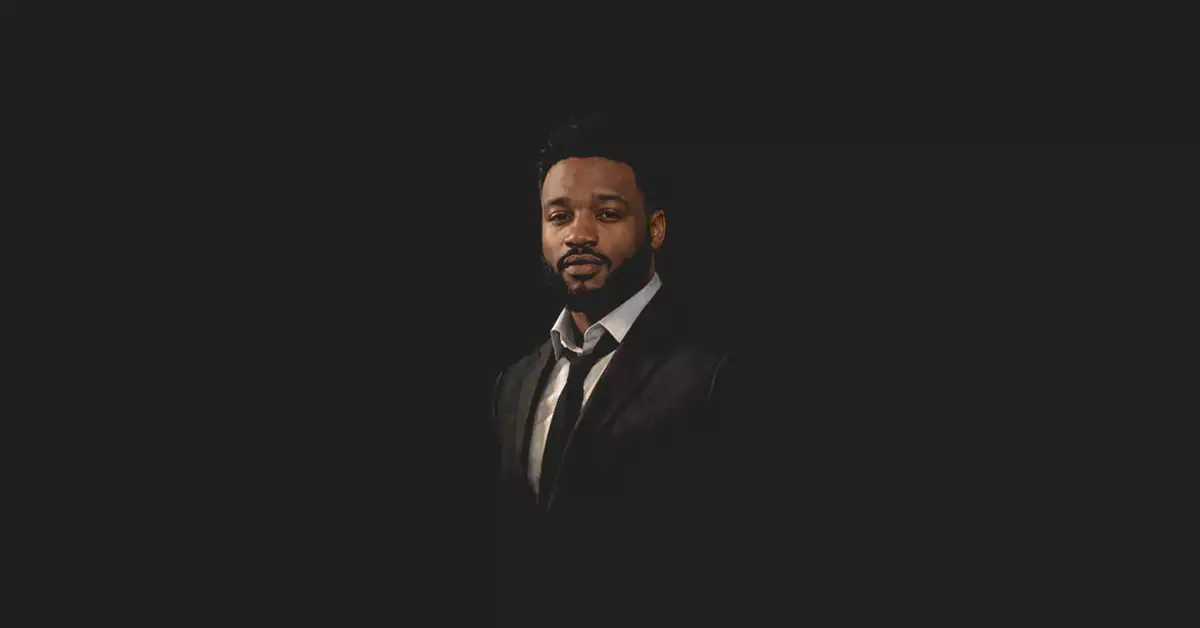
Across Fruitvale Station, Creed, Black Panther, and Sinners, Ryan Coogler keeps making the same film—about inheritance, loss, and what refuses to disappear
There is a moment in Creed — Adonis in his corner between rounds, Rocky leaning close, the crowd noise falling away — where Ryan Coogler does something quietly devastating. He holds the shot. He lets time accumulate. And in that accumulation, what the film is really about becomes unmistakable: not boxing, not legacy, not even fathers and sons in any tidy sense, but the unbearable weight of a name you didn’t choose and cannot put down.
This is what Ryan Coogler does. Not what people say he does — though they are not wrong when they say it. Yes, he is among the most commercially successful Black directors in Hollywood history. Yes, he has threaded the needle between studio obligation and personal vision more consistently than almost any filmmaker of his generation. Yes, Black Panther changed something, and yes, Sinners announced itself as the work of a filmmaker fully arrived at his own terms. All of that is true. But the more interesting fact — the one that explains why his films feel different from the work of directors with comparable ambitions — is that Coogler has, across every film, been making the same movie.
The movie is about what cannot be inherited and what cannot be surrendered.
Fruitvale Station gave him the purest possible version of this subject. Oscar Grant was already dead when the film began. Coogler was not interested in suspense. He was interested in the texture of an ordinary day that had been, without the man living it knowing, already scripted toward a particular ending. The police shooting is not the film’s climax. It is the moment the structure becomes visible. This is Coogler’s essential move: he films grief backwards — not the catastrophe itself, but the pressure that made the catastrophe inevitable. The world as it was before, glowing with the ordinary, which is the only light by which the loss can be truly measured.
In Creed, this reversal becomes the engine of an entire genre. The sports film’s grammar — the training montage, the brutal fight, the earned triumph — is present and performed with genuine skill. But the grammar is haunted. Adonis Creed carries a name he has never spoken publicly, a father he never met, a body shaped by genetics he didn’t consent to. The famous unbroken take of his first fight doesn’t feel like bravura filmmaking so much as a refusal to let the audience look away. Every punch is also an argument with a ghost. Every round survived is one more piece of evidence that continuation — not victory — is the actual human achievement.
The move to Marvel was, in retrospect, the decisive test. Directors absorbed into franchise infrastructure tend to emerge diminished — their idiosyncrasies sanded down, their timing adjusted to fit the requirements of a shared universe. Black Panther is the record of Coogler not being diminished. He found in Wakanda something that his other films had been circling: a space where the question of what has been taken from a people could be asked at full scale. Wakanda is not utopia. It is the conditional image of a past that was not destroyed, and its impossibility is the point. The film’s most honest moment belongs to Killmonger — a man who arrives at the kingdom he should have belonged to and finds that he is, by virtue of all that was done to him, unable to belong to anything. The villain is the character who did not get to be from somewhere.
Coogler understood, directing Wakanda Forever, that the same logic applied to him. He had lost Chadwick Boseman. The film could not pretend otherwise. What it offers instead — and what is misunderstood in criticism that finds the film shapeless or overlong — is the refusal to compress grief to fit a release schedule. The film is slow where it needs to be slow. It holds its silence as long as the silence requires holding. This is not a failure of craft. It is craft deployed in service of an ethic: some absences should not be filled.
Then came Sinners, which felt, when it arrived, like a filmmaker finally permitted to speak his native language at full volume. Set in the Mississippi Delta of 1932 — juke joints, Jim Crow, the very mud from which the blues was pulled — and built around the collision of Christian salvation and vampiric predation, it is the film in which Coogler’s deepest preoccupation becomes its explicit subject. The blues is a system for making grief audible. It does not resolve pain. It gives pain a shape that can be shared, a rhythm that can be passed forward. The vampire — the creature that extends its life through the consumption of others — is colonialism wearing a more honest face. What the film asks, in its layered and sometimes overreaching way, is the question that runs through all of Coogler’s work: what is the difference between being remembered and merely persisting?
The answer his films propose, film by film, is bodily. His camera goes to shoulders before faces, to breath before speech, to the space between notes before the note itself. He is a filmmaker who believes — viscerally, in the construction of every frame — that abstraction must be earned through the physical. History is not a concept in his work. It is a posture. It is the way Adonis holds his hands before a fight. It is the set of a jaw across a funeral. It is the specific way a door closes when someone who will not return has just walked through it.
To watch Ryan Coogler’s films in sequence is to understand that he has been doing something extremely difficult, and that he has not yet stopped. He has been asking Hollywood — that vast machine for the production of amnesia — to make room for mourning. For the most part, it has said yes. What he has built in that room is, in its best moments, something that resembles, however briefly, the thing his films have always wanted to be: a blues song. An acknowledgment that the loss is real, that the loss is shared, and that the only honest response is to keep playing.