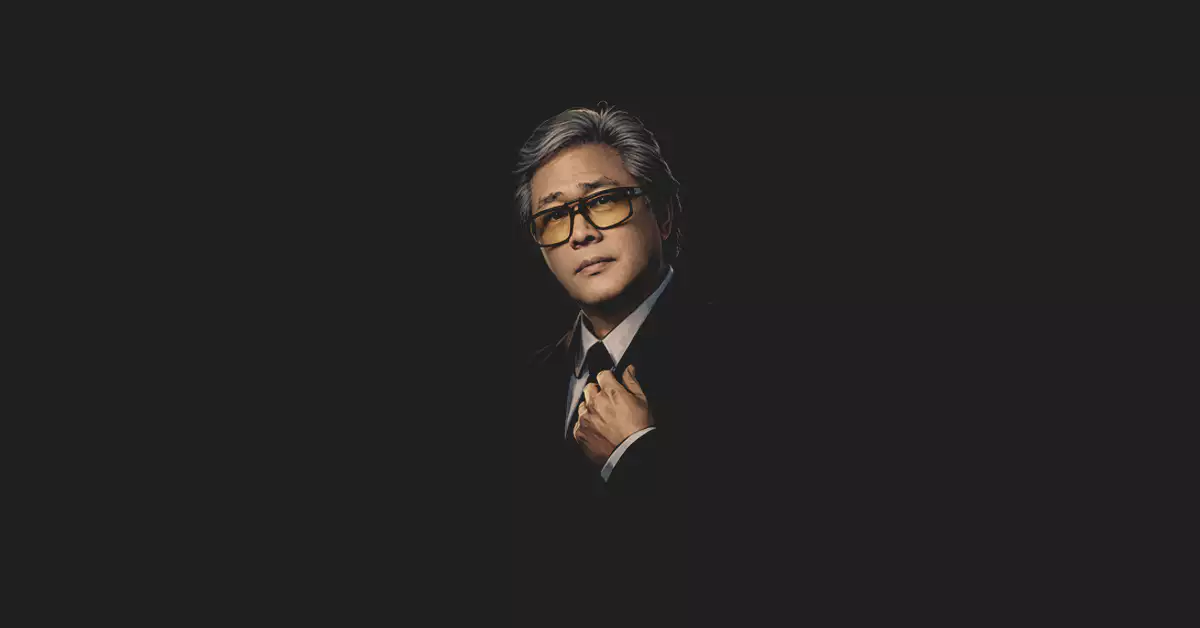
On image, deception, and the limits of seeing in Park Chan-wook’s films
There is a particular kind of deception that only cinema can perform: the deception of the image that knows you are watching it. Park Chan-wook has built an entire body of work inside that knowledge.
His films look, at first encounter, like exercises in excess. The colors are too saturated. The violence too sustained. The plot reversals too catastrophic for any single story to survive. But excess, for Park, is not a failure of restraint — it is the means by which restraint is revealed. Every element pushed past its natural register calls attention to the register itself, to the fact that what you are watching has been constructed, arranged, and offered to you as a surface. The surface is the subject.
The corridor fight in Oldboy has been cited so often as a landmark of modern action cinema that it risks becoming a reference rather than an experience. What is worth saying again, against that familiarity, is what the scene is actually doing. It is a genuine single take — uncut, unbroken, filmed over days of exhausting repetition — and its power comes precisely from its refusal to flatter the genre it inhabits. Oh Dae-su is not a hero in any functional sense. He is a man who has been locked in a room for fifteen years and has come out the other side with nothing intact except the capacity to keep moving. The fight is clumsy, grinding, and punishing in a register that excitement cannot reach. The long take does not produce awe. It produces something closer to dread — time experienced as weight rather than momentum. We are held inside the duration of his suffering without the mercy of a cut, and that unmediated duration is the argument.
This is Park’s governing principle: that the viewer’s comfort is not a courtesy he intends to extend. In Sympathy for Lady Vengeance, he goes further — staging the film’s final act as a collective ritual of revenge so elaborately aestheticized, so carefully composed in color and ceremony, that its violence is disorienting not because it is horrible but because it is beautiful. The audience is placed in an impossible position: invited to feel satisfaction, then made to observe the mechanism that manufactured that satisfaction and delivered it to them. Park does not moralize about this. He makes the machinery visible and leaves you alone with it. What you wanted, the film says, you have received. Whatever follows is yours to account for.
Thirst takes this logic into the body itself. Its protagonist — a Catholic priest who survives a medical trial and emerges as a vampire — is a premise that sounds like genre provocation and turns out to be a sustained inquiry into the conditions under which desire and prohibition come to occupy the same space simultaneously. The film’s use of red is not atmospheric; it is epistemological. Blood is the color in which the sacred and the transgressive become visually indistinguishable, and when Park composes suffering as something beautiful, the question is not rhetorical: are you still capable of knowing the difference, or has the image already foreclosed that possibility for you?
The Handmaiden is perhaps the film in which Park’s formal intelligence arrives at its fullest expression, because it takes his abiding preoccupation — the way images construct rather than disclose — and makes it the engine of the narrative itself. The story concerns people who deceive each other through elaborately sustained performance, and the film is itself an elaborately sustained performance of deception. Scenes are revisited from positions that alter everything already witnessed. The camera’s earlier confidence turns out to have been serving a perspective, not delivering a truth. This is not a structural trick; it is a position on what cinema does and what audiences consent to when they trust a frame.
Decision to Leave is the quietest version of this argument, and in some ways the most precise. The slight drift between Korean and Chinese — the words that travel across that gap carrying a residue the translation cannot account for — is not simply romantic texture. It is Park’s clearest statement of what his films have been proposing all along: that communication is always partial, that understanding is always inferential, and that the desire to see clearly is exactly what makes a person available to being misled. The detective in this film watches with professional dedication. He watches more carefully than almost anyone. And the more carefully he watches, the further the truth recedes.
To call Park Chan-wook a stylist is accurate and insufficient. Style, in his work, is not a surface quality — it is where the argument is conducted. The argument is this: that cinema’s capacity to show us the world cannot be separated from its capacity to construct it, and that a viewer who trusts the image uncritically has already been worked upon without knowing it. His films do not conclude in the way that satisfies. They leave a residue — an image that refuses to settle into meaning, that continues to press against the eye long after the screen has gone dark. This is not a failure of resolution. It is the resolution. The image that stays with you without explanation is the one that has done its work most completely, because it has refused to tell you how to see it.