When Precision Becomes Burden and Justice Turns Private
Antoine Fuqua makes films about men who know exactly what they’re doing, and suffer for it anyway. This is a rarer subject than it sounds. Most American action cinema grants its protagonists the mercy of certainty—the enemy is clear, the cause is clean, and violence arrives as resolution. Fuqua refuses this comfort. In his world, precision and doubt are not opposites. They are the same condition, viewed from different angles.
Consider the way Training Day (2001) handles light. Los Angeles, in Fuqua’s rendering, is overexposed—not glamorous, but forensically bright, the kind of light that reveals too much and explains nothing. Alonzo Harris moves through this light as though it were his natural element, charming and lethal and entirely at ease with a city whose ethical geography has long since dissolved. Hoyt, the rookie, squints. He is still trying to read the terrain by maps that no longer correspond to the territory. The film’s real drama is not the question of whether Alonzo is corrupt—that is established early and thoroughly—but whether the distinction between corruption and survival retains any meaning at all in a system already compromised at its foundation.
The Equalizer (2014) carries this logic further, into something closer to myth. Robert McCall does not improvise. He calculates. The famous hardware-store sequence—in which he scans the room, pre-assigns each object a function, times the encounter to a fraction of a second—operates less as action choreography than as moral geometry. The violence is not reactive; it is premeditated, deliberate, clean. And yet the film refuses to let this cleanness stand as absolution. McCall’s precision is also his burden. He knows what he is capable of. He has always known. The stillness he cultivates in civilian life is not peace but suppression, and Fuqua films it accordingly—long takes, held breath, the uneasy quiet of a man maintaining form under pressure.
This is the question that runs beneath all of Fuqua’s work: what does it cost to be effective? His protagonists are not conflicted in the way genre convention usually imagines—torn between good and evil, law and instinct. The conflict is subtler and more corrosive. They are men who have already made their choice, and who understand, with full clarity, what that choice required them to become. The law, in his films, functions less as a system of justice than as a set of coordinates that his characters have learned to navigate around. Justice, such as it is, becomes a private undertaking—which is to say, a dangerous one.
Walter Benjamin, writing on violence, drew a distinction between force that maintains a legal order and force that breaks it open entirely. He called the latter “divine violence”—not in any theological sense, but to mark the moment when the law’s own inadequacy is exposed, when someone acts not within the system but against the conditions that made the system necessary. Fuqua’s protagonists occupy precisely this position. They are not vigilantes in the classical sense—not simply men who act where institutions fail. They are men who understand why institutions fail, who carry that understanding in their bodies, and who act accordingly, with all the weight of that knowledge.
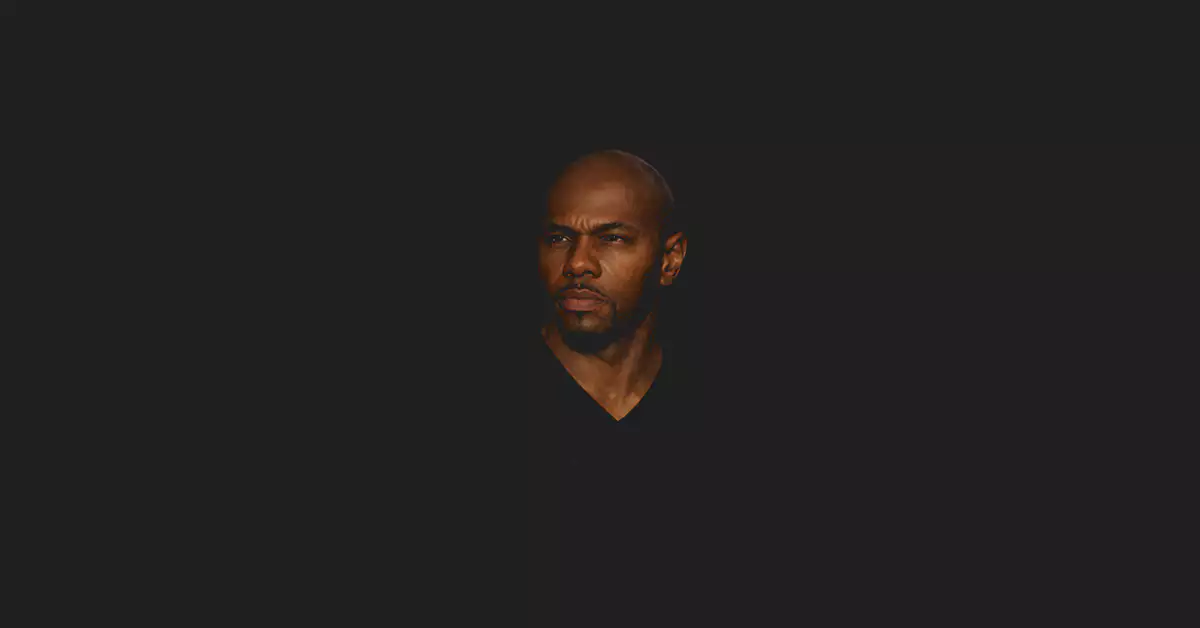
Fuqua’s visual language is built for this weight. He works in contrasts that feel almost aggressive—light that cuts, shadow that swallows, camera movements that arrive half a beat too late or too early, as though the image itself were slightly out of sync with the event it records. In moments of violence, time does not slow in the conventional action-cinema mode, that familiar tribute to kinetic beauty. It thickens. The frame seems to acquire density, as though air itself were resisting what is about to happen. This is not spectacle. It is phenomenology—an attempt to render the texture of a decisive act, the specific quality of time at the moment when something irreversible begins.
He never resolves what he sets in motion. The ethical problems his films raise—about force, about legitimacy, about the private administration of justice—remain open at the end, not because he is evasive but because he is honest. These problems do not resolve. They settle into the body and stay there, which is precisely where Fuqua locates them from the beginning.
There is a moment, just after heavy rain, when the road holds two lights simultaneously—the one above, and its reflection below, trembling on the water. It is a temporary condition. The water drains, the surface dries, and the world returns to its single illumination. But for that interval, everything is doubled: presence and reflection, clarity and distortion, the real and its troubled image. Antoine Fuqua is a filmmaker of that interval. He finds the wet road after the storm and holds the camera on it, letting both lights burn, refusing to choose.