Where Knowing Changes Nothing
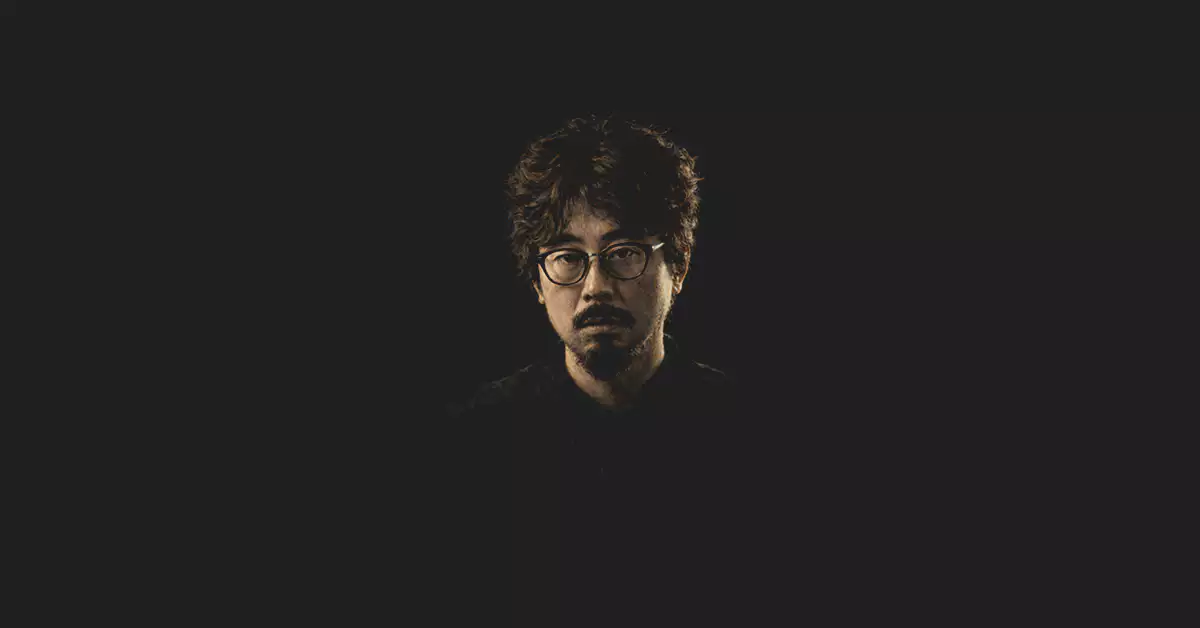
Na Hong-jin has made three feature films in nearly two decades. Three is a small number, and the slowness is not accidental — these are films that took years to finish, that were edited and re-edited until they arrived at something their maker could not improve, and that still apparently left him dissatisfied. The economy of output and the obsessive care behind it are the first things to understand about him, because they explain something about what the films demand: total entry. There is no casual way into a Na Hong-jin film, and there is no clean way out.
The Chaser announces his method in its first movement. A former detective, now running a small ring of women, realizes one of them has not returned. He begins to suspect a client. The suspect is in front of him almost immediately — this is not a film organized around the concealment of the guilty party — and yet nothing that follows feels like a progression toward resolution. Events happen quickly, information arrives, and still the gap between what is known and what can be done about it keeps widening. The camera does not cut toward the answer. It tracks sideways, arrives at angles that exclude, pauses at moments when it should be moving. By the time anything is confirmed, the confirmation is too late to matter. Na has built his thriller around a specific and terrible understanding: that knowing the truth and being able to act on it are two entirely different things, and that the distance between them is where all the horror lives.
This is not a psychological observation dressed in genre clothes. It is a formal principle, embedded in how the film distributes information, how it times its revelations, how it positions the camera in relation to what is happening. The audience is kept consistently half a beat behind — not confused, but perpetually catching up to something that has already moved. That structural lag accumulates into a dread that is unlike the suspense of conventional thrillers, which depends on not knowing. In The Chaser, you often know. You simply cannot stop what you know from happening.
The Yellow Sea extends this logic across a much larger geography and a much longer duration. Its protagonist crosses the water from Yanbian to Seoul to carry out a killing; the job goes wrong; what follows is an exhaustion of the human body across two and a half hours of flight, pursuit, and violence that refuses to build toward anything except its own continuation. The film’s violence is not spectacular in any satisfying sense. It is grinding — bone and concrete, bodies that keep moving past the point where they should stop, wounds that do not end fights. Na does not compose violence for impact; he composes it for duration. The effect on the audience is not excitement but a kind of weight — the sensation of having been in this for too long, of wanting it to stop, which is also the sensation of the protagonist. By the end, we are not watching a man — we are inhabiting a state of depletion.
The Wailing is where Na’s formal intelligence arrives at its most ambitious and most unsettling destination. The film is set in a rural Korean village where inexplicable illness and violence begin spreading outward from a single source — or possibly from several sources, or possibly from none. The structure of the mystery is familiar: there are suspects, there are clues, there is a protagonist whose daughter falls ill and who drives the investigation with the urgency of a father who has run out of other options. What is not familiar is the film’s systematic refusal to let any reading stabilize. Every element that resolves one reading opens another. Every figure who seems, at last, to be interpretable shifts the moment the interpretation seems secure. Scenes that recur have different meanings depending on what surrounds them. The audience builds frameworks the film then dismantles, not through revelation but through recontextualization — the same images meaning different things in a different order.
This is epistemological rather than merely narrative. The film is not withholding a truth that will eventually be disclosed. It is proposing that the category of stable truth does not apply to what is happening in this village. The shaman, the Japanese stranger, the white-clad woman — none of them can be conclusively placed inside the moral architecture that horror films usually provide. Evil, if it is here, does not have a definitive form. It has surfaces, and the surfaces change depending on the angle of the light and the moment of looking.
What persists across all three films — and what makes Na Hong-jin’s trilogy feel like a coherent body of work rather than a collection of thrillers — is a particular relationship to the environment. Rain. Mud. The specific texture of wet earth at night. Fog on the hills. These are not atmosphere; they are argument. In Na’s films, the landscape is not the backdrop against which human action takes place — it is the condition that determines what human action is capable of. Characters do not move through it; they are processed by it. The hills of Gokseong are not more threatening than the streets of Seoul because they are more isolated. They are more threatening because they are older, and they have been absorbing things for longer, and they do not give back what they have taken.
After a Na Hong-jin film ends, the familiar critical question — what did it mean? — tends not to arise with its usual urgency. What arises instead is something more immediate and less answerable. A residue of wrongness. The sensation of having been in the presence of something that your categories do not cover. The ending has closed, but the state the film induced has not. This is what it means to move an audience from understanding to undergoing: not to overwhelm them with information, but to adjust the ground they are standing on until understanding itself becomes the wrong tool for the situation. The earth, as Na knows, does not always hold. Sometimes it shifts under you, and by the time you register the movement, you are already somewhere else.