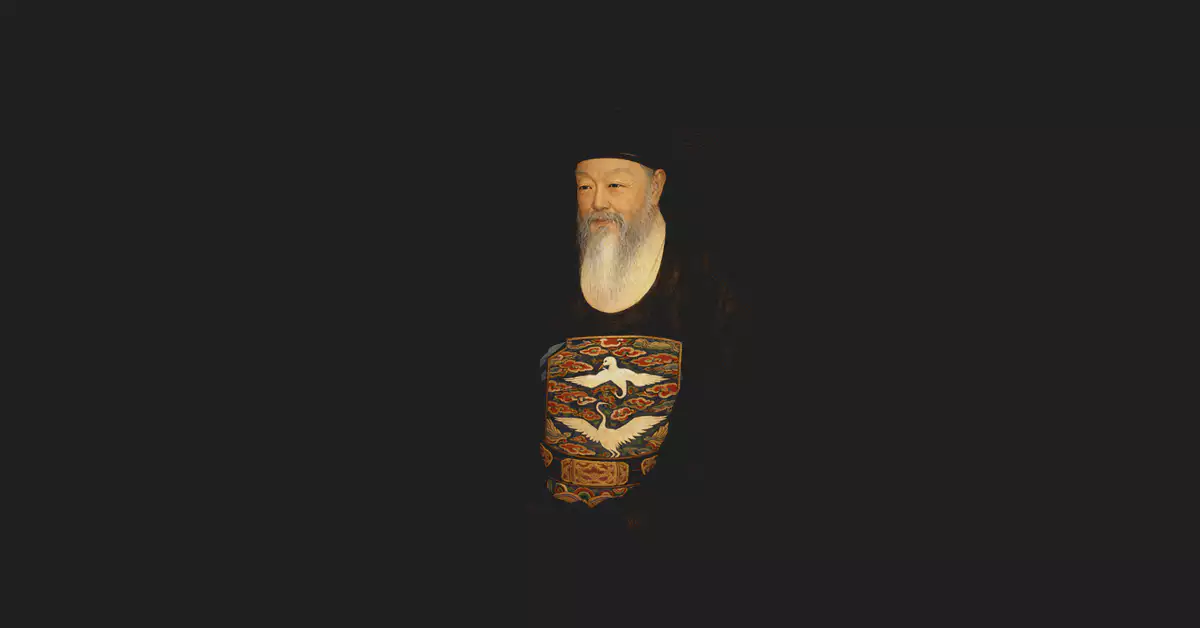
Poems 1–18 from the Wandang Jeonjip, Volume 9
This is Part 1 of the complete English translation of Kim Jeong-hui’s poems from the Wandang Jeonjip; it covers Volume 9, entries 1 through 18, comprising the opening works of the collection.
The World These Poems Inhabit
The first eighteen entries of Volume 9 open onto a world of dense literary sociality. The dominant occasion is the colophon: a poem written on, for, or in response to a specific work — a portrait, a painting, a poetry volume, a calligraphy scroll. The dominant relationship is the ink bond (muk-yeon / 墨緣): the connection between scholars that forms through shared devotion to brush and text, across distances of thousands of li and across the barrier of language itself.
Three of these poems are addressed to or written in the orbit of Weng Fanggang (翁方綱, pen name Tanxi / 覃溪, 1733–1818), the towering Qing dynasty calligrapher and scholar whom Kim met during his 1809 diplomatic mission to Beijing. That encounter was the formative intellectual event of Kim’s life. Weng’s studio — called the Su Zhai (蘇齋), the Su Studio, named for his reverence of Su Dongpo — became Kim’s standard of what a literary life could be. The poems in this section that touch on Weng and his circle carry a quality of reverence that Kim never lost.
The remaining poems shift register: playful occasional verse, a teasing warning about chess, a scholarly survey of Korean springs, a meditation on calligraphy theory, and a closing lyric of autumn solitude. Together they demonstrate the range Kim commanded even at this stage: the scholarly and the intimate, the long-breathed catalogue and the four-line flash of image. What holds them together is the conviction that literary exchange — the sending of poems, the exchange of inscriptions, the rubbing of ancient steles — constitutes a form of reality that geography and time cannot fully dissolve.
Poem 1
題梁左田 鉞 書法時帆西涯詩卷後 (Colophon on Liang Zuotian’s Calligraphy of Shitan’s Transcription of Xiya’s Poetry Volume)
Period: Exact date unestablished; connected to Kim’s 1809 Beijing visit and subsequent correspondence; pre-exile period (before 1840).
Form: Pentasyllabic ancient-style verse (오언고시 / 五言古詩), 40 lines.
Occasion: Liang Zuotian (梁鉞, courtesy name Zuotian) was the son-in-law of Weng Fanggang (覃溪) and a calligrapher in the Weng manner. This poem is written as a colophon on a volume pairing his calligraphy with a transcription by Fa Shitan (法時帆, a Mongolian scholar and devoted follower of the Su Dongpo tradition, pen name Half-Mu Garden / 半畝園) of poems by Li Dongyang (李東陽, pen name Xiya / 西涯, 1447–1516), a leading Ming dynasty literary figure. On first appearances: Weng Fanggang (Tanxi / 覃溪): Qing dynasty polymath calligrapher-scholar, Kim’s intellectual idol; Su Dongpo (坡公): Su Shi, 1037–1101, Song dynasty poet-calligrapher; Li Dongyang (Xiya / 西涯): Ming statesman and literary master; Fa Shitan (時帆): Mongolian scholar, devotee of the Su school.
Original text:
左田西涯卷。優入覃溪室。爲其甥舘故。頗能學法律。濃麗則具足。但少蒼而遹。覃翁眞天人。坡公生今日。平生所爲事。一與坡公匹。運會反復過。瘦銅辭匪溢。以至相䫉末。盖癭衣領闊。筆硯發瑞光。千燈影集一。時帆外國人。敬爲瓣香爇。蘇門稱弟子。知伊是後佛。潭上茶陵宅。文彩尙不沫。風荷一萬柄。靑林映翠樾。十友圖中像。筍脯詩龕設。攷辨甚宏博。溪橋剖舊失。選日招勝流。儼然竹溪逸。作爲西涯圖。翁公主文筆。昔登文殊會。妙旨參纖悉。惆悵半畝園。雪窓憐臥疾。萬里照靑眼。夢想長交欝。異苔今同岑。緣業知有結。
Translation: Cinemawords
Zuotian’s Xiya volume — entering admirably Tanxi’s inner circle. As the master’s nephew-in-residence, he learned the calligraphic rules well. In richness and elegance, fully equipped; only somewhat lacking in aged depth and oblique force. Master Tanxi is truly a heavenly man — Su Dongpo reborn in this age. All that he accomplished through his life matches Su Dongpo stroke for stroke. The tide of times has turned and turned again; Lean Bronze — words that do not overflow. Down to the very shape of the collar — wide lapels cut new, the goiter covered. Brush and inkstone emit auspicious light; a thousand lamp-shadows gathered into one. Shitan is a man of foreign lands — he burns incense petals in reverence. Called a disciple of the Su school, he is known as a latter-day buddha. The Chaling estate beside the pool — its literary splendor still has not faded. Ten thousand lotus stems swaying in wind, green forest mirrored in emerald shade. Among the Ten Friends portrait likenesses, bamboo shoots and dried meat set at the Poetry Shrine. Investigations broad and exhaustive; the stream bridge name resolving an old error. On a chosen day, distinguished visitors gathered — full emulation of the Bamboo Stream hermits. Together they made the Xiya portrait; Master Weng presided with pen and brush. Long ago they climbed at the Wenshu Assembly; subtle teachings absorbed down to every detail. How melancholy — the Half-Mu Garden; the Snow Window laments a bedridden illness. Ten thousand li away, bright eyes still admire; dream and longing have long intertwined in sadness. Different mosses now share the same mountain peak — our karmic bond, I know, has been tied.
Reading notes:
This poem is a dense map of the Beijing scholarly world Kim entered in 1809, organized around three linked figures: Weng Fanggang, Fa Shitan, and Li Dongyang. Kim’s calligraphic judgment in lines 5–6 — rich and elegant but lacking cang er yu (蒼而遹), the quality of aged, oblique depth — is not disparagement but precise technical observation. The term cang (蒼, “aged, dark-green”) names what Kim most valued in calligraphy: the trace of time and weathering in a stroke, the quality he later pursued through his study of eroded stone inscriptions.
The “Lean Bronze” (瘦銅) in line 12 quotes Zhang Shoutong’s inscription on a portrait of Weng Fanggang; Kim adapts it to praise without excess. The goiter reference (lines 13–14) is both an intimate human detail and a deliberate allusion: Su Dongpo’s poem mentions wide lapels covering a goiter, and Weng Fanggang’s own left neck bore a goiter — the physical echo binding the two men across centuries.
Shitan’s Mongolian origin (外國人, “man of foreign lands”) is noted without condescension. Kim positions this Central Asian scholar’s reverence for the Su school as evidence that the Su tradition transcends ethnicity and geography — a point Kim, as a Korean devotee of a Chinese-Qing literary world, had personal reasons to make. The Snow Window closing registers Kim’s one grief: when he arrived in Beijing, Shitan was ill and the meeting never happened. The bond formed across that absence is the poem’s emotional core — the karmic tie (缘业) of those who were meant to meet and did not quite.
Poem 2
雨中無聊。讀君京領石樓諸什。重次寄贈。 (Bored in the Rain. Reading Your Poems from the Stone Tower at Jingyong. Again Rhyming, Sent as a Gift.)
Period: Exact date unestablished; pre-exile period (before 1840).
Form: Pentasyllabic ancient-style verse, 16 lines.
Occasion: A rainy-day poem sent to an unidentified friend whose poems Kim has been reading. Jingyong (京領) may be a place name or a courtesy name; the Stone Tower (石樓) is the friend’s studio or study hall.
Original text:
盡日茆堂雨。庭水宛泉漪。忽憶山中夕。扶杖綠澗厓。仙人遺丹篆。雲靄紆餘思。君詩溯眞源。天機不可追。笑彼齷齪輩。那識大雅姿。古錄藏古春。沁肺發之眉。天華本不染。空憐墨子絲。君度後人。津筏施慈悲。
Translation: Cinemawords
All day the thatched hall in rain; courtyard water ripples like a spring pool. Suddenly recalling an evening in the mountains, leaning on a staff at the green ravine’s edge. The immortal left red seal inscriptions; cloud mist winds around lingering thought. Your poems trace back to the true source — heaven’s workings cannot be chased. I laugh at that petty, base crowd — how could they know the bearing of the great odes? Old records preserve the old spring; piercing the lungs, blooming at the brow. Heavenly flowers, essentially unstained — one mourns in vain Mozi’s thread. Your grace leads those who come after: a ferry raft dispensing compassion.
Reading notes:
A poem of rainy-day reading that moves from sensory detail — the rippling courtyard puddle, the recalled mountain evening — into literary-critical argument. The “great odes” (Daya / 大雅) of line 10 invoke the Book of Songs, specifically its most elevated register, implying that the friend’s poetry belongs to that tradition while the “petty, base crowd” cannot perceive it.
Line 14’s 天華本不染 draws on a famous scene in the Vimalakirti Sutra: Vimalakirti’s room is showered with celestial flowers; the flowers cling to the robes of the self-regarding bodhisattvas but fall freely from those who have abandoned ego. Kim’s application is literary: genuine poetry is unstained by the impurities of fashionable writing. The following line’s 墨子絲 invokes Mozi weeping before a vat of silk, lamenting that white silk can be dyed any color — a classical figure for the corruption of what begins pure. Kim uses it here to mourn the purity that the “petty crowd” cannot sustain.
The closing image of the ferry raft (津筏 / 津筏) is Mahayana Buddhist: the raft that carries people across to the other shore. Applied to a poet, it becomes high praise — the friend’s poems are a vehicle for those who come after, not merely entertainment.
Poem 3
題翁星原小影 (Colophon on a Small Portrait of Weng Xingyuan)
Period: Exact date unestablished; connected to Kim’s Beijing-period relationships; pre-exile period (before 1840).
Form: Pentasyllabic ancient-style verse, 40 lines.
Occasion: Weng Xingyuan (翁星原) was a member of Weng Fanggang’s extended family and calligraphic circle; this poem accompanies a small portrait. The poem also mourns Weng Xingyuan’s early death (implied by 曇花儵現亡 in poem 11 — the two poems share the figure). On first appearance: Fuwen / Fuong (涪翁): pen name of Huang Tingjian (黃庭堅, 1045–1105), Su Dongpo’s most celebrated disciple; the pairing of Su and Huang defines Song literary culture.
Original text:
端莊雜流麗。剛健含阿娜。坡公論書句。以之評君可。此圖十之七。莊健則未果。弗妨百千光。都攝牟珠顆。惟是致君來。共我一堂中。烏雲萬里夢。海濤廻天風。覃室儼侍歡。蘇筵執役同。文字聚精靈。神理合圓通。愧我慚雌甲。生辰又特別。以君家墨緣。宜君生臘雪。如何我生日。而復在六月。依然蘇與黃。君我各分一。飈輪轉大世。前夢吾夙因。笠屐存息壤。石帆叩梁津。秋虹結丹篆。吐氣蟠嶙峋。回首石幢影。息息與塵塵。擧似匡廬偈。坡像涪翁拜。金石申舊約。銖縷窮海外。石銚鳴松風。琅琴答天籟。一念逾新羅。竟有何人解。
Translation: Cinemawords
Proper dignity mixed with flowing elegance; strong vigor containing graceful softness — these are Su Dongpo’s lines on calligraphy; applied to you, they hold. In this portrait, seven parts in ten: dignity and vigor not yet fully achieved. No matter — a hundred thousand lights all gather into a single pearl. The reason I have brought you here to share one hall with me: the Wuyun ten-thousand-li dream, ocean waves turning with the wind of heaven. In Tanxi’s studio we sat reverently in joy; at the Su banquet we served together. Literary spirits gathered their essences; the spirit of principle merged in perfect wholeness. I am ashamed, a lesser turtle; and your birth date is especially different. Through your family’s ink-bond you were born fittingly into the snowy month. But how is it that my own birthday falls again in the sixth month? Still — like Su Dongpo and Huang Tingjian, you and I each take one part. The great world turns its wheel of storms; a former dream — my long-held karmic cause. Sandals and clogs remain in the pledged ground; the Stone Sail knocks at Liang Bridge. Autumn rainbows bind red inscriptions; breath coiling through craggy stone. Turning back to the shadow of the stone stele — breath by breath, mote by mote. Raised as the Kuanglu sutra verse: before the Su Dongpo portrait, Fuong bowed. Gold and stone renew the old covenant; threads of silk exhaust the ends of the sea. The stone kettle sings in the pine wind; the jade-toned zither answers heaven’s music. One thought surpasses all of Silla — who in the end can understand this?
Reading notes:
The poem opens by quoting Su Dongpo’s famous aesthetic formulation: “Proper dignity mixed with flowing elegance; strong vigor containing graceful softness” (端莊雜流麗,剛健含婀娜). This is from Su’s essay on calligraphy, and Kim cites it as the standard against which any brushwork should be measured. His judgment — seven parts in ten achieved — is precise and affectionate rather than critical.
The birth-month comparison (lines 17–24) is unexpectedly personal and warm. Weng Xingyuan was born in the snowy twelfth lunar month (la / 臘), Kim in the sixth — the contrast of winter snow and summer heat. Kim resolves the difference through the Su-Huang parallel: just as Su Dongpo and Huang Tingjian, despite all differences, constituted the defining pair of Song literary culture, Kim and Weng Xingyuan each hold complementary portions of the same inheritance.
The poem closes with the image of the stone stele at Fayuan Temple in Beijing — where Kim and Weng parted — and a declaration that their bond crosses the sea to Korea (Silla, the ancient name, standing here for the entire Korean literary tradition). The final line’s rhetorical question — “who in the end can understand this?” — is not despair but the assertion that only those inside the bond can feel its weight. It defines an inner circle by naming what lies outside it.
Poem 4
水聲洞雨中觀瀑。次沁雪韻。 (Watching the Waterfall in Rain at Susong Grotto, Rhyming with Simseol’s Verse)
Period: Exact date unestablished; pre-exile period (before 1840).
Form: Pentasyllabic ancient-style verse, 14 lines.
Occasion: A poem rhyming with the verse of Simseol (沁雪), an unidentified literary companion. Susong Grotto is a scenic spot, probably in the mountains near Seoul.
Original text:
入谷不數武。吼雷殷屐下。濕翠似裹身。晝行復疑夜。淨苔當舖席。圓松敵覆瓦。簷溜昔啁啾。如今聽大雅。山心正肅然。鳥雀無喧者。願將此聲歸。砭彼俗而野。夕雲忽潑墨。敎君詩意寫。
Translation: Cinemawords
Not many steps into the valley — thunder roars beneath my sandals. Damp green seems to wrap the body; walking in daylight, it feels like night. Clean moss serves as a spread mat; round pines rival roof tiles. Eaves drip once twittered merrily; now I hear only the great odes. The mountain’s heart is precisely solemn — not one bird or sparrow clamors. I wish to carry this sound back and lance with it what is vulgar and crude. Evening clouds suddenly splashed with ink — teaching you to write your poem’s meaning.
Reading notes:
One of the shorter poems in this installment, and among the most sensory. The opening movement — sound before sight, thunder underfoot before the eye adjusts to the dripping green — establishes the grotto as a space where normal perceptual order is reversed. Daylight becomes night, twittering birdsong becomes the Daya (大雅, the “Greater Odes” from the Book of Songs, whose name also simply means the great and dignified), and the eaves’ drip becomes an ethical standard rather than merely a sound.
The pivot in line 12 — “lance with it what is vulgar and crude” — introduces the character bian (砭), which means to lance a medical abscess. The mountain’s sound becomes a surgical instrument against bad taste and crude poetry. This is Kim’s characteristic move: the appreciation of natural sensation is inseparable from literary judgment.
The final couplet — evening clouds “splashing ink” and then teaching the friend to write — completes a movement from natural observation through ethical imperative to artistic instruction. The clouds have done what the poet is doing with the poem: provided an image that teaches by example.
Poem 5
題趙君秋齋隴西雜咏後 (Colophon on Mr. Cho’s Miscellaneous Poems from Longxi, Written at Autumn Studio)
Period: Exact date unestablished; pre-exile period (before 1840).
Form: Pentasyllabic ancient-style verse, 20 lines.
Occasion: A colophon on the poetry collection of a certain Mr. Cho (조씨 / 趙君) written during or after his posting in Longxi (隴西), a remote western region — a posting Kim compares explicitly to Du Fu’s exile years at Kuizhou.
Original text:
君詩老更成。得於杜老詩。邇來所遭逢。一與杜似之。杜老夔州年。卽君隴西時。歲月耗壯心。干戈紆閒思。胷中舊儲蓄。低首向文詞。筆虹觸西天。妖氛無以爲。此體是變雅。正聲從可推。文章公平物。不以地崇卑。皇矣與旱麓。豈君才未追。世人讀君詩。讀之竟莫知。
Translation: Cinemawords
Your poetry grows more accomplished with age, drawing its essence from old Du Fu. Your recent experiences — every one resembles Du Fu’s. Master Du’s years at Kuizhou are your years in Longxi. Months and years have worn down youthful ambition; swords and spears have twisted peaceful thought. Old reserves stored deep within the chest now bow their heads toward literary expression. A brushstroke of rainbow touches the western sky — evil vapors have nothing to work against. This style belongs to the altered elegance; the proper voice can be inferred from it. Literature is an impartial thing — not elevated or lowered by place. The “Huangyi” and “Hanlü” odes — has your talent fallen short of these? The world’s people reading your poetry read through it and still do not understand.
Reading notes:
The comparison of Mr. Cho’s Longxi years to Du Fu’s Kuizhou years is the poem’s organizing argument. Du Fu’s years at Kuizhou (766–768), stranded by illness and political disorder in the gorges of the Yangtze, produced the 秋興 (Autumn Meditations) sequence — universally regarded as the summit of Du Fu’s achievement and among the greatest poems in the Chinese tradition. Kim is saying: adversity and displacement produced Du Fu’s finest work, and the same logic applies here.
The two odes named in line 17 — “Huangyi” (皇矣) and “Hanlü” (旱麓) — are from the Book of Songs‘ “Greater Odes” (Daya), the poems of founding virtue and righteous governance. They represent the highest standard of the Chinese poetic tradition. Kim’s rhetorical question — “has your talent fallen short?” — expects the answer no.
The closing couplet is characteristically blunt: the world reads the poems and does not understand them. This is not merely modesty on Mr. Cho’s behalf; it names a recurring situation in Kim’s literary world — the gap between what genuine literary achievement is and what casual readers register.
Poem 6
送稷山使君 (Farewell to the Magistrate of Jiksan)
Period: Exact date unestablished; pre-exile period (before 1840).
Form: Pentasyllabic ancient-style verse, 22 lines.
Occasion: A farewell poem for the new magistrate of Jiksan (稷山), a district in present-day South Chungcheong province. Jiksan’s historical significance derives from ancient stone monuments; Kim, whose primary scholarly passion was epigraphy, writes to request a rubbing.
Original text:
不羨渭川竹。不羨欝林石。獨羨舊白城。歷歷多古蹟。慰禮城十濟。聖居雲五色。奉先弘慶碑。遠溯黑水刻。昔聞丹篆偈。是歐陽波磔。五百年前苔。淋漓元氣積。君今此中去。墨緣儍奇特。十萬貫可纏。一片石難得。煩君傳秘諦。爲我試一拓。風雨榛荒處。顯晦有消息。吾知稷之民。擧手欣加額。仁政及此石。况復黎與赤。
Translation: Cinemawords
I do not envy the bamboo of the Wei River, nor the stones of Ullim Forest. What I envy alone: old Baekseong, its ancient traces clear and plentiful. Wiryeseong — ten Baekje kings; a sacred residence of five-colored clouds. The Bongseon Honggyeong stele — tracing far back to inscriptions at the Black Water. Long ago I heard of the red-seal inscription: the brushwork of Ouyang’s style. Five hundred years of moss — saturated, vital energy accumulated. You go now into that region; the ink bond here is extraordinarily rare. A hundred thousand gwan can be unwound, but one piece of stone is hard to come by. Please transmit the hidden teaching — make one rubbing for me. In wind and rain, through the overgrown waste, what is revealed and hidden carries its own news. I know the people of Jiksan raise their hands and add their foreheads to the ground. Benevolent governance reaches even this stone — how much more to the common people, red and black.
Reading notes:
The poem’s epigraphic passion is barely concealed beneath its farewell structure. Kim opens by declaring that what he envies is not famous natural resources — the bamboo of the Wei River, traditionally associated with Zhuangzi’s skill, or the storied stones of Ullim — but the ancient inscriptions of Jiksan.
The Bongseon Honggyeong stele (奉先弘慶碑) is Kim’s specific quarry: a monument whose brushwork he believes belongs to the Ouyang style (歐陽, referring to the Tang calligrapher Ouyang Xun / 歐陽詢, 557–641, or possibly Ouyang Xiu / 歐陽修, 1007–1072, an epigraphist). The request for a rubbing (탁본 / 拓本) is urgent and specific — Kim wants the physical imprint, not a description. The comparison between the monetary value of “a hundred thousand gwan” (a significant sum) and the irreplaceable value of “one piece of stone” crystallizes his entire aesthetic hierarchy.
The closing couplet’s praise of benevolent governance is formulaic farewell-poem courtesy, but the preceding line — “what is revealed and hidden carries its own news” — gives it weight: even a stone buried under five hundred years of moss knows something that a good magistrate will attend to.
Poem 7
次贈朴君戲效其體 (Rhyming to Give to Mr. Bak, Playfully Imitating His Style)
Period: Exact date unestablished; pre-exile period (before 1840).
Form: Pentasyllabic ancient-style verse, 20 lines.
Occasion: A playful poem sent to someone named Bak (朴君), imitating his own poetic style as a form of friendly teasing.
Original text:
滄海萬頃波。始由一勺多。日月大於地。烏兎何婆娑。北極天之蔕。衆星羅天花。地旋却不省。將奈墜空何。人生內天地。徒向夢夢過。曲木忌直影。豸性本不阿。知否儒與釋。薰蕕不同科。洙泗舊光芒。漸渝竺乾家。誰爲繪事人。素功敎後加。君才具天美。夢吸五色霞。
Translation: Cinemawords
The ten-thousand-acre waves of the blue sea began from the accumulation of a single spoonful. The sun and moon are larger than the earth; how freely the crow and hare dance. The North Star is heaven’s navel; the myriad stars spread like heaven’s flowers. The earth rotates, yet we do not notice — what would we do if we fell into the void? Human life exists within heaven and earth, yet passes in a cloud of dreaming. Warped wood dreads its own straight shadow; the censor’s nature does not flatter. Do you know the difference between Confucianism and Buddhism? Fragrant herb and stinkweed are not of the same kind. The Shui and Si rivers hold the old radiance; gradually it flows toward the house of Indic learning. Who is the one who makes paintings? The white silk must be laid down before color is added. Your talent holds heaven-given beauty; dreaming, you inhale the five-colored mists.
Reading notes:
A cosmological poem with a moral argument embedded in its scale. The first eight lines move through images of the vast (the ocean from a spoonful; the sun and moon larger than earth; the pole star; the rotating earth) to arrive at a single observation: we do not notice that the ground beneath us is moving. The implication is extended in line 9 — human life exists within the same cosmic scale, yet we drift through it dreaming.
The pivot to ethics in line 11 uses a classical image: warped wood, when laid flat, still casts a straight shadow, meaning that what is crooked betrays itself. The court censor (豸性, literally the nature of the jie 獬豸, the mythological one-horned beast that could detect the guilty) does not flatter — integrity is structural, not chosen.
The final image — “the white silk must be laid down before color is added” (素功敎後加) — quotes Confucius in the Analects discussing painting as a metaphor for virtue: the white foundation (su / 素, also meaning “plain virtue” or “native goodness”) must precede any brilliance. Applied to Mr. Bak, it is high praise disguised as cosmological play.
Poem 8
戲贈趙公禮 (Playfully Giving to Cho Gongnye)
Period: Exact date unestablished; pre-exile period (before 1840).
Form: Pentasyllabic ancient-style verse, 20 lines.
Occasion: A teasing poem accompanying the gift of a chess set from someone’s second son to Cho Gongnye (趙公禮, full name unknown). Kim warns that the chess pieces carry inauspicious symbolism.
Original text:
阿仲手中棊。贈君無吝色。我聞老龍子。墮胎如果核。此棊之化成。擧子所忌剋。白者兆曳白。黑者象飮墨。其象甚不吉。如章擧不食。怪君靑雲手。郞潛久偪仄。百事易成魔。六夢或爲噩。皆是棊所使。得失應自擇。又復忽減年。少者成侵斥。其害乃如此。爲君一太息。
Translation: Cinemawords
The second son’s chess set, sent to you with no stinting color. I have heard that a dragon elder’s offspring, miscarried, resembles a fruit kernel. This chess set, in its transformed form, is what examination candidates dread and shun. The white pieces augur handing in a blank paper; the black pieces symbolize drinking ink. These symbols are exceedingly inauspicious — a candidate like a lamprey who refuses to eat. Strange — a man of your cloud-reaching hands has long been squeezed in the cramped lower ranks. A hundred matters easily become demons; the six dream-categories may turn to nightmares. All of this is what the chess pieces cause — gains and losses you must choose yourself. And further: years may suddenly diminish; the younger will encroach and push aside the elder. Such is the harm that flows from this. I breathe one long sigh on your behalf.
Reading notes:
Among the most playful poems in the installment, this is a mock-serious warning against chess. Kim’s logic builds on wordplay: chess stones (棊 / 碁) resemble the miscarried offspring of an old dragon — a mythological creature associated with extraordinary talents that cannot be expressed (a common metaphor for frustrated genius). The “white stone” symbolizes 曳白 (handing in a blank examination paper, the worst possible failure), while the “black stone” symbolizes 飮墨 (drinking ink — a humiliating ritual associated with failed scholars).
The poem’s deeper target is examination culture. Cho Gongnye is identified as a man of talent (“cloud-reaching hands,” meaning one who ought to have risen) who has been stuck in minor positions. Kim’s playful attribution of this failure to chess pieces is both comic and pointed: obsession with games rather than study, luck governing outcomes that should follow from merit. The six dream-categories (六夢) are a classical taxonomy of dream types from the Zhou Li; the “nightmare” category suggests that chess has disturbed not just waking life but sleep.
Poem 9
子午泉 (Meridian Springs)
Period: Exact date unestablished; pre-exile period (before 1840).
Form: Pentasyllabic ancient-style verse, long-form catalogue poem, approximately 30 lines.
Occasion: A scholarly catalogue of unusual springs throughout Korea, written in the tradition of antiquarian-geographical poetry. Kim documents springs with exceptional properties — tidal, salty, sour, ink-black, medicinal — across numerous provinces.
Original text:
吾邦九州外。奇勝誰與讓。洌陽及馯域。於泉亦多狀。佛池湧異品。金屑相儕行。靑松與一牟。琅城之東嶂。名以椒水者。所在卽一樣。湯井任所記。神水甛合釀。種種潮汐泉。覩歷非躗妄。鳥岾志兩穴。葱倉誇三漲。昔聞郴州水。分半冷與湯。若較於增地。厥理竟誰長。馬靈沸甑餴。咸羅聚墨浪。酸則江陰在。鹹者栗口旁。富寧古石幕。資莊淸演漾。瀸汍隨地別。天一費巧匠。拈起諸泉理。奧妙不可暢。况復中州大。無非聞見刱。去訂子午泉。聊以博采訪。
Translation: Cinemawords
Beyond Korea’s nine provinces, in remarkable scenery who can compete? From Yeolyang to Mongnyeok — even in springs the forms are many. Bulchi yields unusual qualities, gold flecks moving alongside. At Cheongsong and Ilmo, and the eastern ridge of Nangseong — those named “pepper-water springs” are found in the same manner everywhere. The warm spring at Onyang, recorded by Im, and the sweet spirit-water good for brewing. All manner of tidal springs — what I have witnessed and traveled is no exaggeration. The gazetteer of Ojeom records two holes; Chongnang boasts three daily surges. Long ago I heard of Chenzhou’s water — half cold and half warm. Compared with Jeungjam’s springs, which surpasses in principle? Maryeong bubbles like a steaming cauldron; Hamna gathers waves of ink. The sour spring is at Gangeum; the salty spring runs beside Yukgu. Buyeong, ancient Seokmak — Jajang Pool flows clear, not freezing in winter. Seeping and winding — each place has its own; heaven has spent great craft here. Taking up the principle of all these springs — their mysteries cannot be fully expressed. How much more so in China’s vast center: none of it has not been seen and recorded. I set out to settle the matter of Jao springs — gathering and consulting as widely as I can.
Reading notes:
A poem that reads as a scholarly survey compressed into verse — an unusual form that Kim employs to organize geographical and hydrological observations. The springs catalogued include: the Buddhist Pool (Bulchi / 佛池) at Yangsan with its gold-flecked water; pepper-water springs (椒水) at Cheongsong, Munui, and Cheongju; the warm spring at Onyang (湯井) recorded by Im Wonjon; tidal springs at Bunyeong (鳥岾) and Chungnang (葱嶺); ink springs at Hamna (咸羅 / Hamyeol); sour springs at Gangeum (江陰 / Gimcheon); and the eternally clear Jajang Pool (資莊潭) at Buyeong that does not freeze.
The poem’s logic is quietly comparative: Korea’s springs rival the famous springs of China (Chenzhou in Hunan province had springs that were half cold, half hot). Kim’s final gesture — “I set out to settle the matter of Jao springs, gathering and consulting as widely as I can” — positions the poem itself as a scholarly instrument, an attempt at epigraphic-style verification applied to hydrology. The same analytical drive that led Kim to catalogue stone inscriptions appears here directed at water.
Poem 10
聞某從市中得拙書流落者購藏之。不覺噴飯如蜂。走寫以志媿。畧敍書道。又以勉之。 (Hearing That Someone Purchased My Stray Calligraphy from the Market, I Burst Out Laughing Like a Swarm of Bees. I Quickly Wrote This to Record My Embarrassment, Briefly Set Out the Way of Calligraphy, and Encouraged Him Thereby.)
Period: Exact date unestablished; pre-exile period (before 1840).
Form: Pentasyllabic ancient-style verse, 26 lines.
Occasion: Kim learns that one of his discarded calligraphy pieces has been purchased at the market and collected — an embarrassment that becomes the occasion for an extended meditation on calligraphic theory and the gap between his self-assessment and others’ regard.
Original text:
吾書拙且陋。廿載迷路歧。未解元和脚。寧識蘭亭皮。或有人强要。拈毫先忸怩。不足博一芋。何緣贐市兒。君書妙傾城。鏡裏舞春姿。獨詣騁異才。自求有餘師。多怪嗜痂癖。仍成愛鶩癡。芝箭歸並蓄。豨苓諒不遺。自檢輒自惑。直欲詰君爲。然吾不善書。書道頗聞之。溯源該三蒼。橅眞學衆碑。平直均密間。煥乎字外奇。會稽千年跡。尙有快雪時。旁探樂毅海。遙證落水彝。而歐怪褚硏。攝之一牟尼。山海叩崇深。鸞鳳恣鞭笞。紛紛屢飜本。捫籥堪一噫。古肥與今瘦。倒行又逆施。扶起大雅輪。特竪勿字旗。行當張吾軍。以此爲質劑。
Translation: Cinemawords
My calligraphy is clumsy and crude; for twenty years I have wandered lost at crossroads. I have not grasped the footsteps of the Yuanhe masters, much less known the surface of the Lanting. When someone insistently demands a piece, I pick up the brush with embarrassment first. Not enough to trade for a single taro — how did it come to be sold to a market boy? Your calligraphy is marvelously city-conquering, like a spring dancer in the mirror. Alone in your attainment, you command rare talent; yourself you seek and find teachers in abundance. Strange — the addiction to eating scabs; it has become a fool’s love of ducks. Mushroom arrows and hogtruffle pig-fungus — they are all gathered and kept, nothing wasted. Examining myself, I am immediately confused — I truly want to interrogate you. And yet: though I am no good at calligraphy, I have heard quite a bit about the calligraphic way. Tracing the source, it encompasses the Three Scripts; modeling the true, it learns from the many steles. Between evenness and straightness, uniformity and density — beyond the characters, an uncanny brightness. The thousand-year traces at Kuaiji — still alive in the Kuaixue rubbing. Beside it, the sea of the Yueyi letter; far proof in the tripod bronze of the Luo River. And from these: the strange quality of Ouyang, the research of Chu — all gathered into a single pearl. Mountain-high, sea-deep — knocking at their profundity; the phoenix and luan bird whipped freely. Rubbing after rubbing, turning the copies over — groping at the lock — one long sigh. The fat of antiquity and the thinness of today: moving backward, applied in reverse. Upholding the wheel of great elegance, planting specially the banner of restraint. In time I shall deploy my forces — with this as the measure of proof.
Reading notes:
Among the most important poems in the collection for understanding Kim’s calligraphic theory. The poem’s structure is: false modesty → theory → program. Kim’s self-deprecation (twenty years lost; his calligraphy not worth a taro) is real in one sense — he genuinely felt he had not yet arrived — but it also sets up the extended theoretical passage that follows.
The calligraphic genealogy Kim traces is specific: the Three Scripts (Sancang / 三蒼, ancient character systems); the Lanting Xu (蘭亭序, Wang Xizhi’s preface, the supreme model-book); the Kuaixue Shiqing Tie (快雪時晴帖, a famous Wang Xizhi letter); the Yueyi Lun (樂毅論, Wang Xizhi’s essay on the general Yue Yi); the bronze tripod inscriptions (彝) from the Luo River; and then the Tang masters Ouyang Xun (歐陽詢) and Chu Suiliang (褚遂良).
The line “the fat of antiquity and the thinness of today: moving backward, applied in reverse” (古肥與今瘦。倒行又逆施) encapsulates Kim’s epigraphic program: he deliberately reverses the prevailing trend toward thinness and elegance in favor of the fuller, weightier brushwork of ancient steles and bronzes. “Planting the banner of restraint” (勿字旗) refers to raising the character wu (勿, “do not”), a call for restraint against fashionable excess. The final couplet’s military metaphor — “deploying my forces” — frames the calligraphic project as a campaign.
Poem 11
歸畵於紫霞。仍題。 (Returning a Painting to Jaha, with an Added Inscription)
Period: Exact date unestablished; pre-exile period (before 1840).
Form: Pentasyllabic ancient-style verse, 16 lines.
Occasion: Kim returns a painting to Shin Wi (신위 / 申緯, 1769–1845), whose pen name was Jaha (紫霞 / Purple Mist). The painting is a work by Jin Nong (金農, 1687–1763, self-called Lao Tie / 老鐵, “Old Iron”), one of the Eight Eccentrics of Yangzhou, brought from China through the mediation of Weng Xingyuan (星原, mentioned in poem 3). Weng Xingyuan has since died (implied by 曇花儵現亡).
Original text:
我雖不知畵。亦知此畵好。蘇齋精鑑賞。烏雲帖同寶。持贈霞翁歸。其意諒密勿。歎息老鐵畵。東來初第一。星原筆鎔鐵。似若壽無量。如何須臾間。曇花儵現亡。萬里遂千古。撫畵涕忽泫。匪傷星原死。吾輩墨緣淺。
Translation: Cinemawords
Though I do not understand painting, I also know this painting is good. The Su Zhai’s refined connoisseurship — prized alongside the Wuyun rubbing collection. Carried as a gift for Master Jaha’s return; his intention, I understand, was close and private. I sigh over Old Iron’s painting — the first and finest to come east. Xingyuan’s brush, melting iron — as if it would endure without end. How is it that in an instant a flower in a dream — so suddenly gone? Ten thousand li, now a thousand years. Touching the painting, tears well up suddenly. Not for sorrow at Xingyuan’s death — but that our generation’s ink bond runs thin.
Reading notes:
A short elegy in the form of a painting inscription. Jin Nong (Lao Tie / 老鐵) was famous for his qishu (漆書, lacquer script) — a flat-tipped brush style that produced strokes with the density and weight of lacquered wood. He was among the most admired eccentric artists of the Qing period, and Kim’s judgment — “the first and finest to come east” — positions this painting as a singular arrival in Korean literary culture.
The brief passage on Weng Xingyuan (lines 9–12) mourns his early death with the Buddhist image of the udumbara flower (tanhua / 曇花), which in Buddhist tradition blooms once in three thousand years and then vanishes — the quintessential figure for the fleeting appearance of something rare. The twist in the final couplet is characteristic Kim: he says he is not weeping for Xingyuan’s death specifically, but for the thinness of the ink bond between his own generation of scholars. The dead man is lamented less as an individual than as evidence of how few genuine literary connections any life accumulates.
Poem 12
題神溪寺萬歲樓 (Inscription on Mansei Tower at Singyesa Temple)
Period: Exact date unestablished; pre-exile period (before 1840).
Form: Pentasyllabic ancient-style verse, 20 lines.
Occasion: An inscription on Mansei Tower at Singyesa Temple, located in the Geumgangsan (Diamond Mountains / 金剛山) range. Kim argues against the common name “Ten Thousand Sights View” and the fashionable reduction of Geumgangsan to spectacle.
Original text:
金剛萬物觀。㝡爲名過實。其語本自誕。面目殊全失。又有好事者。拈起新萬物。其新其舊何。彼境此境一。試問判命去。所得竟何別。俄者仰視處。俯觀還不悉。若有眞境界。赤城而丹闕。當勇猛精進。亦不憚屼峍。憐彼世間人。未覩想怳惚。法眼空見欺。遮葉事痴絶。我說眞實義。靑松旁參質。知不造化初。寧有先試筆。願言崇明德。截念其愼勿。
Translation: Cinemawords
Geumgangsan’s “Ten Thousand Sights View” — among all names, the most excessive. This phrase was originally self-invented; the true face has been completely lost. There are also the curious sorts who take up a new “Ten Thousand Sights.” Whether new or old — what is the difference? That realm and this realm are one. Try asking: given the task of judging — what difference, in the end, has been gained? In the moment of looking upward, looking down again, still not fully grasping. If there is a true realm, it is the red-walled city and the cinnabar gate. One must practice with fierce determination, undaunted even by the sheer and jagged. I pity the people of the world — who, having not seen it, imagine and feel lost. The dharma eye, deceived for nothing; the concealing leaves — this foolishness is absolute. What I say is the true and real meaning: let the green pine be your companion in inquiry. Know that the initial creation has not previously been approached by brush. I wish to speak of honoring bright virtue — cut off wrong thoughts and be carefully restrained.
Reading notes:
A Buddhist-philosophical poem about the danger of naming. Kim’s argument: the popular name “Ten Thousand Sights View” (萬物觀) substitutes language for experience and creates a false relationship between the visitor and the landscape. Both the old name and new variations are irrelevant — “that realm and this realm are one,” a formulation drawn from the non-dualist logic of the Vimalakirti Sutra.
The poem’s most interesting moment is the image of the pine tree as a companion in inquiry (靑松旁參質) — not books, not human teachers, but the pine itself. This is a characteristically Taoist-Buddhist move: the non-human world as a more reliable guide than any accumulated naming. The final line’s call for caution (截念其愼勿) — cutting wrong thoughts — echoes the tradition of meditative restraint associated with the Chan Buddhist approach to famous landscapes.
Poem 13
西澨次韻 四首 (Rhyming the Verses of Seosaet, Four Poems)
Period: Exact date unestablished; pre-exile period (before 1840).
Form: Five-character regulated verse (오언율시 / 五言律詩), 8 lines each; four poems.
Occasion: Four poems written by rhyming with the verses of “Seosaet” (西澨, “West Shore”) — likely a pen name or studio name of a literary friend.
Original text:
其一 江湖多奇士。席珍盡雙南。有箇西澨客。古貌又古心。文章運玄宰。拈起劈海金。琪林皆瑞卉。珠毛非俗禽。平生抱明月。三載摩華衿。可憐柯亭笛。誰辨爨下音。
其二 五色本無定。烏白而鵠黔。器車叶繩尺。委曲棄中林。但覓于勤調。寧識雲和琴。君詩出天然。靈籟響球琳。孤詣若不禁。一往情所深。時來問奇字。知君不世心。
其三 良玉同啄情。蠶絲自抽思。奈何獨自苦。靜吸而動噓。大道如靑天。還御九折車。不隨巧宦巧。但甘愚谷愚。然否鳴鶴音。聞天在九𦤎。
其四 詩證渡河象。書仿摩天鵠。但媿曹與檜。兵車不成國。廬偈覓前夢。鴻泥溯舊迹。梅花耿冬心。百卉競春曄。韶頀滿雲山。性天足邱壑。獨喜彭城妙。還有一派竹。
Translation: Cinemawords
I The rivers and lakes hold many remarkable men; spread the jewels — they fill the south entirely. Here is one guest of the West Shore: ancient in face, and ancient in heart. Literature moves the dark master; lifting it picks up gold splitting the sea. All in the jade forest are auspicious plants; pearl-feathered, not the common bird. All his life he held the bright moon; three years polishing the flowered robe. Pity the flute of Keting — who can hear the sound from beneath the cooking pot?
II The five colors are essentially without fixed nature — a crow may whiten, a swan may blacken. Vessels and wheels comply with measure and rule; what bends and turns is abandoned in the middle forest. But to seek through diligent tuning — how could you know the Yunhe zither? Your poetry emerges from heaven’s own nature; spirit-music rings through jade and lapis. In solitary attainment, as if one cannot hold back — once set in motion, feeling runs deep. When the moment comes, ask for the unusual character — I know your heart is not of this common age.
III Fine jade shares the emotion of pecking; silkworm threads draw their own thinking out. And yet — why labor so alone? Breathing in stillness, exhaling in motion. The great Way is like the blue sky; yet you still drive the nine-turn carriage. Not following the clever official’s cleverness — only content to be foolish-valley foolish. Whether this is so or not — the calling crane’s sound: heard in heaven from nine bends below.
IV Poetry proves itself like the crossing elephant; calligraphy imitates the sky-brushing swan. But I am ashamed — like Cao and Hui — the war-chariot state never fully formed. The Lushan sutra verse seeks the former dream; wild goose tracks on mud trace the old path. Plum blossoms — bright as winter heart; the hundred plants vie in spring splendor. Shaohao music fills cloud and mountain; the nature of heaven is sufficient in hills and valleys. What I love uniquely: the wonder of Pengcheng — and still there is this one line of bamboo.
Reading notes:
Four poems in the more formal regulated-verse register, each presenting a slightly different angle on the recipient. The Keting flute image in Poem I draws on a famous Tang dynasty anecdote: a fine flute was discovered beneath a cooking-pot stand, its extraordinary quality unrecognized by those around it — a figure for latent genius ignored by circumstance. Kim applies it with melancholy: who can hear what this man is?
Poem II’s central argument is that natural poetic gifts cannot be forced: “five colors are without fixed nature” — talent and expression follow their own laws, not those of conventional training. The Yunhe zither (雲和琴) is a legendary instrument from an ancient Chinese musical compendium, its sound impossible to approximate through mere diligence.
Poem III draws on the Book of Songs: the calling crane is heard from the ninth bend of the swamp (九皋 / jiugao) — a figure for the man of virtue whose true qualities travel upward regardless of circumstance. The paradox of “foolish-valley foolishness” (愚谷愚) echoes Han Yu’s famous “Foolish River” prose — the deliberate adoption of apparent stupidity as a form of integrity in a world where cleverness is corrupted.
Poem IV’s closing image — “this one line of bamboo” — is the most condensed: Pengcheng (彭城, modern Xuzhou) was where Su Dongpo painted bamboo, and the bamboo represents everything about the Su tradition that Kim has been circling throughout this installment: uprightness, hollow virtue, the scholar’s unyielding nature in cold. One line of bamboo holds the whole.
Poem 14
和篠齋運使徐公 淇修 夜坐聞蟲吟見憶之作 (Harmonizing with Transport Commissioner Seo Gisu’s Night-Sitting Poem on Hearing Insects and Being Remembered)
Period: Exact date unestablished; pre-exile period (before 1840).
Form: Pentasyllabic ancient-style verse, 22 lines.
Occasion: A poem written in response to a poem by Seo Gisu (徐淇修), a Joseon official serving as transport commissioner in a border region. Seo’s original poem described sitting at night, hearing insects, and thinking of Kim; Kim replies in kind.
Original text:
簷竹細凉通。池荷殘香息。遠懷忽無端。機觸者難塞。千里一緘書。鍼芥不差忒。上言復下言。廻環抵日昃。衍之鴨江波。寄以鶻山色。塞舘偏多蟲。不耐夜喞喞。湁潗笏外湊。的歷琴底逼。慆慆歎不歸。瞿瞿思其職。寧知此聲中。杓車已欹側。世間瑣細物。未有如爾極。平生磊落志。緜纏制不得。天涯與地角。愁腸並恨臆。長壽故都月。流影戀蜩翼。文章一寸心。證此管城刻。
Translation: Cinemawords
Eaves bamboo — a fine coolness passes through; pond lotus — the last fragrance settles. Distant longing comes suddenly, groundlessly; when the trigger touches, it cannot be stopped. A thousand li — one sealed letter; needle and mustard seed: no discrepancy. Words above and words below; cycling round until the sun tilts west. Extended by the waves of the Yalu River; sent by the color of the Falcon Mountains. At the border lodge, insects are especially many — they cannot endure the night’s chirping. Welling up, urgent, pressing beyond the tablet; clearly heard, pressing up from the zither’s base. Lamenting endlessly that one cannot return; anxiously thinking of one’s duties. How could he know that in this sound the ladle-car has already tilted to the side? Among the trifling small things of the world, none has reached this extreme. The great ambitions of a lifetime — entangled and bound, impossible to hold. At heaven’s edge and earth’s corner — grieving bowels alongside resentful chest. The moon over Jangsu, the old capital — its flowing shadow loves the cicada’s wing. The heart of literary work — one inch; proven by this brush-tip inscription.
Reading notes:
A poem of sympathetic resonance across distance — Kim receiving the image of the border official sitting in the insect-loud night and sending back his own parallel state. The letter is described with extreme precision: “needle and mustard seed: no discrepancy” — every word accounted for, the correspondence exact.
The insects are not simply atmospheric. They become, in Kim’s handling, figures for the inescapable and the untameable: the sounds that press “beyond the tablet” and up from “the zither’s base” are both literal insects and the sounds of longing, duty, and frustrated ambition that have their own insistence. The Yalu River and Falcon Mountains as intermediary figures — the letter travels not directly but through the landscape between the two men.
The “ladle-car tilted to the side” (杓車已欹側) is a reference to the Big Dipper’s rotation, marking the advance of the night (and, by extension, the aging of a life). By the time the insects have finished their midnight chorus, the night has tipped. The poem closes with the one-inch heart of literary work — a figure for the microscopic territory that nonetheless holds everything.
Poem 15
奇趙君秀三催硯 (Urging Mr. Cho Susam to Send the Inkstone)
Period: Exact date unestablished; pre-exile period (before 1840).
Form: Pentasyllabic ancient-style verse, 16 lines.
Occasion: Kim is waiting for an inkstone promised by Cho Susam (趙秀三, 1762–1843, a noted poet and artist of the late Joseon period). The poem is a playful letter of impatience.
Original text:
萬里橐中硯。自呈文字祥。異紋斑玉帶。奇品敵香姜。其孫來證約。其意千金長。云何中塗轍。忽復示彷皇。始訝印欲刓。終疑歃如忘。懸懸屢支踵。望望幾瞳眶。未聞袖海蘇。君書當袖石而來。虛佇爛柯王。近聞君赴雲石棊。此心已透石。應化鸜眼蒼。此身儻石壽。下探赤水强。黃河淸有俟。泰山石敢當。
Translation: Cinemawords
An inkstone carried ten thousand li in a sack — presenting itself as a blessing for literary work. Unusual grain, mottled jade-belt patterns; a remarkable piece, rivaling fragrant ginger. His grandson came to confirm the promise; the intention — a thousand gold pieces long. How is it that midway in the road it suddenly showed uncertainty? At first I was astonished the seal might be worn down; finally I suspected — sealed away and forgotten. Anxiously I have stood on tiptoe again and again; watching and watching — how many times my eyes strained. I have not heard of Su tucking the sea in his sleeve — you should tuck the stone in your sleeve when you come. I wait in vain like the woodcutter by the rotted chess board. I hear you have recently gone to the Cloud-Stone chess game. This heart has already penetrated the stone — it should transform into the blue-eyed mynah. If this body were as long-lived as stone, it would probe deep into the Red Water. The Yellow River will someday clear; Mount Tai’s stone can surely withstand.
Reading notes:
A poem of mock-elaborate complaint — Kim waiting for a promised inkstone and turning the wait into a small literary production. The inkstone’s qualities are described with the connoisseur’s vocabulary: unusual grain (이문 / 異紋), mottled jade-belt pattern (반옥대 / 斑玉帶). The grandson’s arrival to confirm the promise creates a binding obligation; the inkstone’s failure to arrive is therefore a kind of broken covenant.
The classical allusions multiply as Kim’s impatience intensifies. “Su tucking the sea in his sleeve” refers to a figure of capacious generosity — Kim inverts it humorously: you should tuck a single stone in your sleeve when you come. The rotted-board woodcutter (爛柯王) is a Daoist tale: a woodcutter watches two immortals play chess, the game lasts so long that his axe handle rots — a figure for time lost in waiting. Kim adds that Cho Susam has apparently gone to play chess, which is why the stone has not come.
The closing lines modulate from humor to classical earnestness: the Yellow River, proverbially turbid, will someday clear — a figure for eventual fulfillment of long-deferred hope. Mount Tai’s stone “can surely withstand” (石敢當, literally “the stone dares to withstand”) — an apotropaic phrase found on stones placed at doorways to ward off evil, here playfully applied to Kim’s own determination to receive the inkstone.
Poem 16
寄題靑溪卜居 並序 (Inscribed from Afar on Cheongye’s Hermitage, with Preface)
Period: Exact date unestablished; pre-exile period (before 1840).
Form: Pentasyllabic ancient-style verse, 20 lines, preceded by a prose preface.
Occasion: Kim writes a poem for the hermitage of someone called Cheongye (靑溪, “Green Stream”), whom he has never met but whose poem on gourds he has read and admired. Kim knows Cheongye’s younger brother Seokyu (碩斿).
Preface (prose): Kim notes he does not know Cheongye personally, but has seen his poem on gourds and found it to have ancient flavor, suggesting genuine cultivation. He observes that such unusual men are scattered through the mountains and wilds, and reflects that the southern landscape has produced many exceptional talents in Cheongye’s family.
Original text:
錦山秀而冶。錦水淸且冽。富春一角歟。山陰道中必。脩竹靑琅玕。簷葍花如雪。井落開小境。一笠團茆潔。高咏發其中。那得不奇絶。幺絃寔寡和。鐵笛疑逬裂。胎息玄覈妙。排奡碧海掣。性天固素養。淵源定特別。眞正儒家法。何處傳妙訣。瓦缶尊夔罍。噍音辨蕤鐵。擧世塵眯目。無地試金屑。愧非北面老。誰識南方傑。丹砂與竹箭。元無京洛出。可憐五石瓠。江湖急飢渴。
Translation: Cinemawords
Geumsan Mountain — beautiful and graceful; Geumgang River — clear and cold. A corner of Fuchun? — surely the middle of the Shanyin road. Tall bamboo, blue jade stalks; eaves bindweed flowers like snow. At the well and settlement, a small realm opens; one bamboo hat, the thatched hut clean and round. High singing rises from within — how could it not be extraordinary? The small string has few to harmonize with it; the iron flute — one fears it will burst and crack. Embryonic breath: profound, nuclear, wondrous; sweeping movement: dragging the blue sea. Heaven-nature is the cultivated foundation; the lineage is surely of a special kind. True and proper Confucian method — where is the subtle teaching transmitted? Earthen crock honored above a Kui bronze vessel; sharp sounds distinguishing between rui and iron. The world entire — dust clogs the eyes; nowhere to test the gold-dust. Ashamed I am not the elder before whom one faces north — who would recognize the southern hero? Cinnabar and bamboo arrows — they never came from the capital and Luoyang. Pity the five-stone gourd — the rivers and lakes urgently thirst and hunger.
Reading notes:
Kim has never met Cheongye, yet the poem is one of the installment’s most generous — a long-distance tribute to unknown talent. The opening landscape evokes two Chinese literary parallels: Fuchun (富春 / Fuyang, Zhejiang), where the recluse Yan Guang lived during the Han dynasty; and Shanyin (山陰, Shaoxing), Wang Xizhi’s home district — high literary company for a hermitage in the Korean south.
The “small string with few harmonists” (幺絃寔寡和) and the “iron flute that fears to burst” are images of extreme, almost unbearable musical purity — the kind that has no audience because it exceeds what any audience can receive. Kim has read one poem on gourds and extrapolated an entire artistic character.
The closing “five-stone gourd” (오석호 / 五石瓠) is from Zhuangzi: a gourd so large it cannot be used as a dipper — talent so great it finds no conventional use. Kim’s final image is of the rivers and lakes thirsting: the world is hungry for what this man has, but does not know it. The poem writes into existence a community of recognition that geography and circumstance have prevented from forming.
Poem 17
紫霞自象山歸。稇載而來。皆石也。戲呈一詩。 (Jaha Returned from Sangsan Loaded Down — All Stones. Playfully Presenting a Poem.)
Period: Exact date unestablished; pre-exile period (before 1840).
Form: Pentasyllabic ancient-style verse, 22 lines.
Occasion: Shin Wi (Jaha / 紫霞) has returned from his posting as magistrate at Sangsan (象山) with his official cart loaded not with goods but entirely with stones. Kim presents a humorous poem on the absurdity and, beneath the humor, the virtue of this.
Original text:
先生爲在日。愛石劇愛錢。礧磈巑岏者。簿書並夤緣。余方有公事。九日紗羅川。及其歸去來。惟石載之前。家人不知石。迎門喜色溢。謂是千黃金。詎知一頑物。南山與北山。似此盡一一。遠塗但載來。竟何衣食出。先生且安坐。摩挲老苔衣。坡公之九華。米老於無爲。數載象山政。治理實在玆。視民同視石。旣惠而旣慈。自憐忝石交。對石屢發歎。公心似石堅。石渝心不漫。書畵夢詩髓。豈止證公案。我持此石歸。馬圖慙韓幹。石凡三。余得其一。遂以此詩爲石券。
Translation: Cinemawords
When the master was posted there, his love of stones surpassed his love of money. The rough and jagged, the craggy and towering — ledgers and documents were just their connection. I had public business at the time, nine days on the Saracheong River. By the time of his going and coming — only stones loaded at the front. His family, not knowing stones, overflowed with smiling faces at the gate, thinking it a thousand gold pieces. How could they know it was a single stubborn thing? From south mountain and north mountain — one by one exactly like this — carried from the distant road. In the end, what food and clothing comes of it? Master, please sit easy and stroke the old moss-coated surfaces. Su Dongpo’s nine Huayang stones; Elder Mi at Wuwei — bowing to the rock. Several years governing Sangsan — the administration was truly in this. Viewing the people as he views the stones: already benevolent, already compassionate. I pity myself — a poor friend to stones — facing the stones, I sigh repeatedly. A public heart hard as stone; when stone changes, the heart remains unstained. Painting and calligraphy, dream and poetic marrow — how could it be limited to proving this case? I carry this stone home — the horse portrait shames Han Gan. [Three stones in total; I received one. I therefore take this poem as the stone’s deed of ownership.]
Reading notes:
The most purely comic poem in this installment, and one of the most revealing. Kim frames the scene with theatrical precision: the family at the gate, full of anticipation, then the discovery that the cart contains nothing but rocks. The comic structure — expectation of gold, revelation of stones — conceals a philosophical argument: stones are gold, for those who understand.
The classical stone-lovers Kim invokes are specific: Su Dongpo (坡公) collected nine stones from Huayang in Sichuan, considering them companions; Mi Fu (米老, the Song calligrapher, here called “Elder Mi”) famously bowed to an unusual stone in Wuwei, addressing it as “Elder Brother Stone.” Shin Wi’s behavior places him in this lineage — not eccentricity but connoisseurship with deep precedents.
The turn in line 21 — “viewing the people as he views the stones: already benevolent, already compassionate” — is the poem’s most serious moment. Kim suggests that the official who cares for objects with patience and precision carries the same quality of attention into governance. The final note (Kim received one of the three stones and takes this poem as its ownership deed) is warmly practical: the poem completes the transaction.
Poem 18
偶吟 (Improvised Verse)
Period: Exact date unestablished; pre-exile period (before 1840).
Form: Pentasyllabic ancient-style verse, 20 lines.
Occasion: An undated, occasionless lyric — one of the purest expressions of Kim’s own inner state in this installment.
Original text:
時候忽已徂。明月又秋風。孤懷攬逝雲。戚戚悲西東。風雨日以至。咫尺間山川。老槐高百尺。飛花過墻翩。搴花咏所思。悵然心莫展。籜石眷幽寂。菱藻冒淸淺。林蟬破鮮霽。天地一懷新。澄景畢來集。緬邈區中塵。及時須行樂。浮生足可惜。顧結芳杜鄰。聊以數晨夕。
Translation: Cinemawords
The season has suddenly already passed; bright moon and again the autumn wind. Lonely feeling gathers in the drifting clouds; grieving east and west in quiet sorrow. Wind and rain come day by day; mountain and river are arm’s length away, yet distant. Old locust tree, a hundred feet tall; petals blown over the wall, fluttering. Plucking flowers, chanting what I think — the heart desolate, unable to unfold. Bamboo-shoot stone treasures the quiet solitude; water-chestnut and duckweed cover the clear shallows. Forest cicadas break the fresh clearing — heaven and earth — one thought renewed. The clear scene, all gathered in: dim and distant, the dust of the ordinary world. In timely moments one must find joy; floating life — quite enough to be mourned. I turn to bind myself to fragrant herbs for neighbors, simply to count the mornings and evenings.
Reading notes:
The installment closes with a poem that does not address anyone, argue for anything, or celebrate any particular connection. It is an autumn lyric — a genre with roots in the earliest Chinese poetry, associated with the intuition of time passing and the impossibility of holding what is beautiful.
The imagery is characteristically precise: the hundred-foot locust tree (a figure for something old and established), petals blown over a wall (something escaping containment), bamboo-root rock in quiet solitude, water-chestnut and duckweed in clear shallows. The forest cicadas breaking the fresh clearing after rain introduce the moment of renewal — “heaven and earth, one thought renewed” — before the poem retreats to its melancholy baseline.
The closing allusion to “fragrant herbs” (芳杜) comes from the Li Sao (離騷) of Qu Yuan: the exiled poet who binds himself to fragrant plants as companions in isolation. Kim is not yet in exile when this poem is written, but the disposition is already present — the scholar’s loneliness even inside the literary world, the sustained practice of “counting mornings and evenings” as a form of patience. The phrase floating life (浮生) is from Li Bai: “Floating life, like a dream — how often does joy come?” Kim’s answer is implicit: not often; so one must count.
Closing Note
Eighteen poems in, a pattern has begun to establish itself. Kim operates across a very wide register — the lengthy scholarly tribute, the dry comic complaint, the spring-day lyric, the philosophical survey poem — but a consistent sensibility moves through all of them: the belief that literary connection is a form of reality, that stones and ink and ancient steles carry knowledge that money cannot, and that the proper response to a world full of people who “read and do not understand” is to keep writing with exactitude regardless. The next installment enters deeper into this world, moving through poems that push the calligraphic-literary argument further while also extending Kim’s range of occasional subjects.
Explore the Complete Kim Jeong-hui Poetry Series
Critical Essays on Kim Jeong-hui
The Complete Poems — Introductions
Volume 9 — Early Poems
Volume 10 — Exile Poems