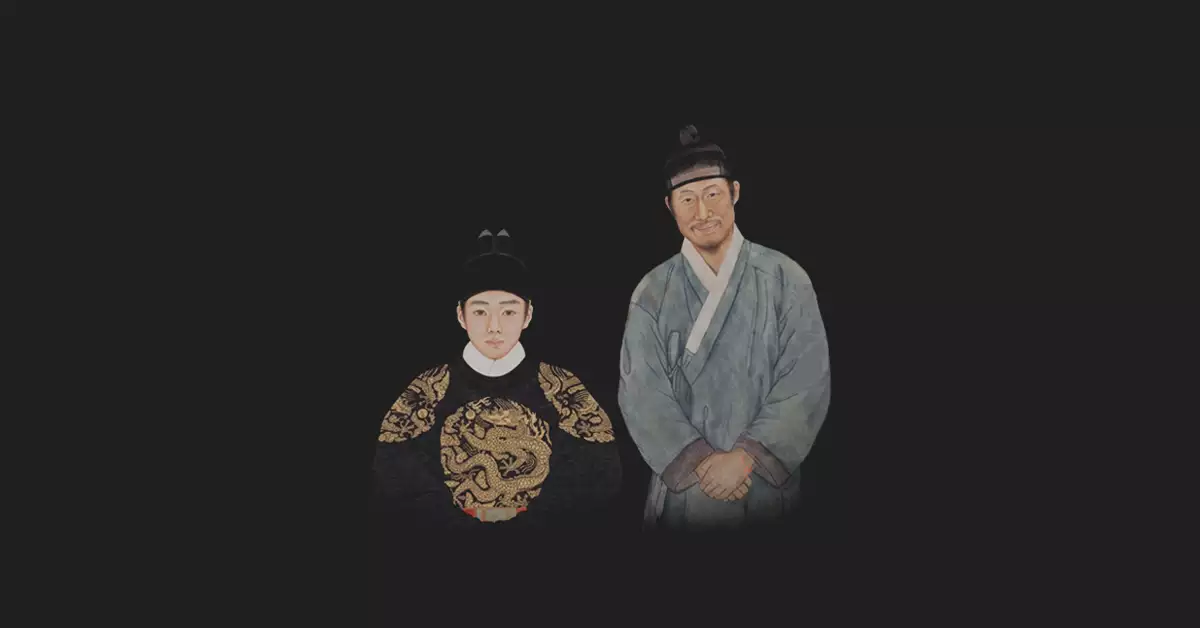
The King’s Warden (2026)
On Jang Hang-jun’s The King’s Warden and the act of loyalty that cannot save
The bow appears early. A tiger is threatening the village, and the exiled king who has been regarded as a liability—an unwanted guest who arrived in place of the prosperous exile Eom Heung-do had been angling to receive—proves himself by drawing and loosing. The threat passes. What the village receives in that moment is not a demonstration of royal power. It is something stranger: evidence that the person they have been obliged to house is capable of caring about their survival. The arrow lands, and something shifts in how Eom Heung-do watches the boy.
This is the bow’s first appearance in the film. It is not its last.
The King’s Warden is built on one of the most impoverished historical records in recent Korean cinema—two facts about a man named Eom Heung-do: that he retrieved Danjong’s body after the deposed king’s death in 1457, and that he buried it and fled into hiding with his sons. What passed between these two acts, what compelled Eom Heung-do to risk his family’s destruction by touching the body of a politically toxic exile, the record cannot say. The film invents it. It invents a friendship. It invents the specific texture of two people learning to inhabit the same space under impossible conditions. It invents the moments through which a cynical calculation—hosting an exile as an opportunity for the village—transforms into something that costs everything and is chosen anyway.
But the film also invents something else, something more difficult. In the accounts that survived, the man who killed Danjong and the man who buried him were different people. The killer was a minor functionary of the government apparatus; the mourner was Eom Heung-do. Jang Hang-jun collapses them. In this film, Eom Heung-do is the one who pulls the bowstring that ends Danjong’s life, at Danjong’s request, to spare him a death at someone else’s hands.
I want to stay with this decision for longer than the film does.
There is a scene in the film’s middle that reveals the shape of loyalty in this world. Eom Heung-do’s son Taesan is being beaten at Han Myeong-hoe’s order. Eom Heung-do watches. And Danjong—who has no power, who cannot protect anyone—turns on Han Myeong-hoe and screams. The confrontation achieves nothing. The beating continues. Danjong’s rage is genuine, complete, and entirely ineffective.
What Eom Heung-do sees in this moment is the specific form that fidelity takes when it cannot protect. Danjong cannot save Taesan. He says so with his body—the anger, the voice raised to its full force, the presence without any power behind it. And Eom Heung-do, watching his son being beaten, makes the choice he has been approaching for weeks without arriving at. He does not betray Danjong to Han Myeong-hoe.
This is counterintuitive. Most narratives of loyalty operate on a logic of protection: you are faithful to someone because they can protect you, or the relationship itself constitutes shelter. Here the logic is different. Danjong’s inability to protect Taesan is not evidence against him. It is evidence for him. His attempt—visible, ineffective, completely sincere—is what Eom Heung-do responds to.
There is something the film understands about loyalty that is harder to say plainly: it is not a calculation but a recognition. Eom Heung-do does not choose Danjong because Danjong is useful or powerful or likely to survive. He chooses him because he saw what Danjong did when there was nothing to be gained by doing it.
Yoo Hae-jin plays Eom Heung-do with the specific intelligence of an actor who understands that the most important performance is the one that happens in the spaces between speech. His Eom Heung-do operates through withholding—not the withholding of a character who is hiding something, but the withholding of someone who cannot yet name what is happening to him. The film’s comedy in its first half is possible because Eom Heung-do is, initially, someone whose desires are transparent and small. He wants his village to prosper. He wants his son educated. He wants the modest advantages that proximity to a notable exile might bring. These desires are legible and unheroic and, for a while, the comedy of the film rests on them.
What the film does not let us inside is the mechanism of the change. We see Eom Heung-do before and after the transformation, but the interior of it—what it feels like to move from calculating host to man who risks everything—is withheld. The film trusts us to feel the weight without showing us the machinery. This is either wisdom or evasion, and I find myself unable to decide which.
Park Ji-hoon’s performance, meanwhile, has been building toward one specific moment. Across the film, Danjong’s voice gathers force—or more precisely, it recovers force that was stripped from it. The confrontation with Han Myeong-hoe is the scene in which this voice achieves its full range: not the ornate grammar of royal declamation but something more personal, more directly connected to anger and loss. Danjong speaks at his highest volume in a room where it accomplishes nothing at all. This is the voice the bowstring silences.
The bowstring. Eom Heung-do pulls it at Danjong’s request. The film presents this as an act of fidelity—the most loyal thing Eom Heung-do can do is kill Danjong rather than leave him to someone else. The emotional logic of this moment has been built carefully and is genuinely felt. But let me ask what this act is, beneath the film’s framing of it.
Eom Heung-do kills Danjong. He kills the person whose presence in his village cost him everything he had originally wanted from it. He kills the person whose attempt to defend Taesan—futile, sincere, complete—was the moment Eom Heung-do understood what he was choosing. He kills the person whose voice he has watched return to its full register, and then silences it himself.
The bow appeared first as an instrument of connection—Danjong and the bow and the tiger and the village and the moment when something shifted. It returns as an instrument of ending. The film rhymes these moments deliberately: the same object, two uses, the same relationship between Danjong and Eom Heung-do at the center of both. The first use built something between them. The second concludes it.
What does it mean to conclude a relationship by ending the life of the person you are in it with? The film needs us to accept the killing as fidelity rather than murder—as the act of someone who has nowhere left to go but through. It works hard to earn this. The earning is real. And yet the ethical weight of what Eom Heung-do does with the bowstring remains, for me, heavier than the film’s emotional resolution fully accounts for.
I keep returning to what the merger of roles means. Jang chose to make the killer and the mourner one person. The historical record had separated them—perhaps out of a wish to protect Eom Heung-do’s reputation, perhaps because they simply were different people. The film collapses this separation. The man who retrieves and buries the body is the man who created the body. He performs the act of violence and then the act of mourning without any pause between them, any transition that might let the two acts settle into their separate moral weights.
Whether this is the film’s deepest insight or its most uncomfortable evasion, I cannot settle.
The film does not end at the burial. The burial is not shown.
What the film gives us instead is the river, and Danjong’s body wrapped in cloth, floating downstream. Eom Heung-do waits for it. When the body reaches him, he embraces it—and speaks.
갑시다. 갑시다. Let’s go. Let’s go. And then: 자, 나갑시다. 따뜻한데로, 갑시다. 나갑시다. 나갑시다. Come. Let’s go. To somewhere warm. Let’s go. Let’s go.
He is talking to a body. He is talking to Danjong as if Danjong can still hear him, as if the relationship has a direction, as if there is somewhere to go and the going is something they will do together. 따뜻한데로. To somewhere warm. The words are not metaphor. They are the most specific thing in the film. Eom Heung-do refusing to let the death be the end of the conversation.
This is what I had not understood while writing the essay up to this point. I argued that Eom Heung-do’s fidelity required killing Danjong—that the bowstring was the furthest point loyalty could reach. But the bowstring is not the furthest point. 갑시다, 갑시다 is the furthest point. After pulling the bowstring, Eom Heung-do continues the relationship. He goes to the river. He waits. He embraces what comes to him. He talks to it as if it can respond.
What does it mean to say “let’s go” to someone who is dead? Not in metaphor, not in consolatory spiritual displacement, but in the specific murmured voice of someone still in a conversation with this person. The death has happened. Eom Heung-do caused it. And 갑시다, 따뜻한데로 is what comes next in the conversation anyway.
The screen dissolves to the empty river after this. Not to Eom Heung-do’s face. Not to the body. To the water itself—the surface that carried Danjong downstream and now carries nothing, and will keep moving toward wherever rivers go. The historical record has the same relationship to what happened: it holds the surface of events and cannot hold what moved through them.
Then the historical documents appear, one by one, as if emerging from time—the Yeollyeo account of the bowstring, the Hyeonjong Sillok entry on Eom Heung-do retrieving the body, the Gukjo Inmulgo recording his words about righteous action and the harm he was willing to accept. Each document is a fragment of what the official record chose to preserve. And then: 그로부터 241년 후, 이홍위는 단종으로 복위되었고 엄흥도는 충의공으로 추서되었다. Two hundred and forty-one years later.
Finally: two nameplates hanging from tree branches, and the text that their graves are together in Yeongwol now.
This is the film’s true ending—not a burial but a disclosure that took 241 years to arrive. The historical record eventually caught up to the relationship the film had to invent, recognized that Eom Heung-do deserved to be in the same place as the king he had retrieved from the river and spoken to as if speaking could still matter. The two nameplates together are the record’s slow acknowledgment of what it could not say when it happened.
But the line that stays with me is not in the historical documents. It is not in the title cards. It is 갑시다. 따뜻한데로, 갑시다. What Eom Heung-do said to a body in a river, in the voice of someone who was still, somehow, talking to someone.
The record will not tell us whether Danjong heard it. Neither will the film. But the murmuring was real, and specific, and in that specificity it contains everything the essay has been reaching toward: a fidelity that did not end with the act of killing, that continued past the bowstring into the river and the embrace and the conversation Eom Heung-do kept having with someone who was gone.
What he carried from that riverbank into years of hiding—what shape the two acts took inside him as he lived with them—neither the record nor the film will say. But 갑시다, 따뜻한데로 is enough to know that the conversation was still going when he left. That wherever he went afterward, he went with the sound of it.