How Tang China’s Most Radical Voice Turned Impermanence, Wine, and the Moon Into a Philosophy That Still Resonates a Thousand Years Later
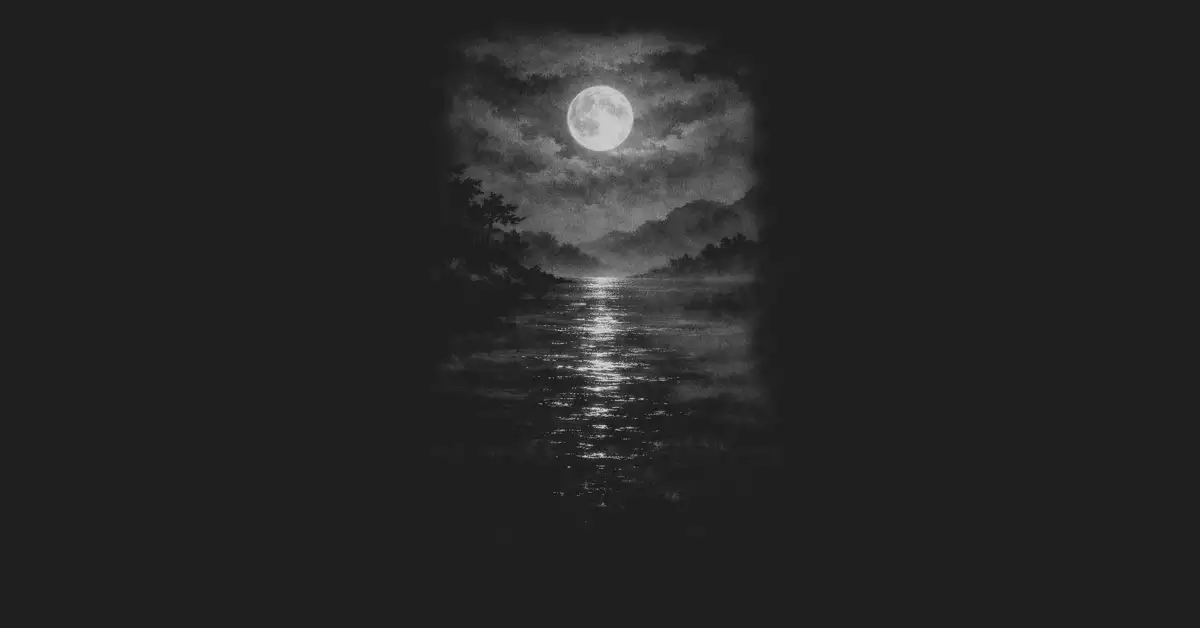
There is a legend about how Li Bai died. Drunk on a boat one night, he leaned over the side to embrace the moon’s reflection in the water and drowned reaching for it. Almost certainly untrue. Entirely irrelevant. What matters is that people believed it — and more than that, wanted to believe it. Because if you have spent any time with his poetry, you already understand: that is exactly the kind of death Li Bai would have chosen.
He was born in 701 CE, probably in what is now Sichuan province, though even that is disputed. He died in 762. In between, he wandered. He studied swordsmanship and Taoist mysticism. He drank, famously and prodigiously. He spent a brief, turbulent period at the imperial court of Emperor Xuanzong, where his genius was celebrated and his behavior was eventually too much to accommodate. He was exiled. He traveled. He wrote approximately a thousand poems that survive, and probably many more that do not. He is widely regarded as the greatest poet in the Chinese literary tradition — a tradition that spans three thousand years and contains extraordinary competition for that title.
None of this quite explains why reading Li Bai still feels like being picked up by something larger than yourself and briefly held.
The Other Great Tang Poet
The easiest way into Li Bai is through his counterpart. Du Fu, his near-contemporary, is the other figure who occupies the summit of Tang poetry, and the contrast between them is one of the most illuminating in world literature. Du Fu watched the empire fracture around him and wrote about it with clear-eyed moral sorrow — his poetry is historical, social, deeply human in its attention to suffering and responsibility. He remained anchored to the world as it was, with all its weight.
Li Bai was constitutionally incapable of that kind of anchoring. Where Du Fu recorded, Li Bai dissolved. His poetry does not observe the world from a fixed position; it moves through the world as if gravity were optional. Mountains, rivers, stars, wine jars, moonlight — these are not the stage furniture of his poems. They are the medium through which his consciousness flows and eventually disperses. Du Fu once called him “an immortal banished from heaven,” which captures something essential: Li Bai writes as though he has arrived from somewhere else and cannot quite remember why he agreed to be confined to a human body.
This is not a pose. It is a philosophy. And to understand it, you need to understand the intellectual tradition that ran deepest in his imagination.
Taoism as a Way of Seeing
Li Bai read the Confucian classics — every educated person of his era did. But his sensibility was formed by Taoism, and specifically by the version of Taoist thought that had been circulating through Chinese culture since Laozi and Zhuangzi first articulated it centuries before the Tang dynasty. The basic proposition is deceptively simple: the world is not a collection of fixed things but a continuous field of change. What we call “reality” is actually a process — a flowing, cycling, perpetually transforming movement that Taoism names the Tao, the Way. The river does not contain the water; it is the water moving. The mountain does not contain the stone; it is a particular shape that erosion has not yet finished changing.
For most people, even those who accept this intellectually, it remains an abstraction. For Li Bai, it was apparently the texture of immediate experience. His poems do not illustrate the Taoist worldview; they enact it. Images do not build toward conclusions — they leap. A poem may begin at the edge of a waterfall, arrive suddenly at a constellation, and then land in the bottom of a wine cup, and the connections are not explained because they do not need to be. In a universe where everything is continuous with everything else, the leaps are not logical because logic is itself a kind of artificial boundary. The poem simply moves the way the Tao moves: fast, without apology, indifferent to the small categories humans impose on experience.
This is why Li Bai has sometimes been compared, loosely and with appropriate caveats, to the Surrealists — poets like Breton who believed that genuinely free associative movement could reveal connections the conscious mind had been trained to suppress. But the comparison is ultimately misleading. Surrealism was a deliberate methodology, a therapeutic rebellion against rationalism. Li Bai’s disjunctions are not a technique applied to experience. They are his experience. The world, for him, actually worked this way.
“Bring In the Wine”: Impermanence as Argument
The poem most often cited as Li Bai’s supreme achievement is “Qiang Jin Jiu” — rendered into English in various ways, most directly as “Bring In the Wine” or “Come, Drink.” It opens with one of the most kinetically powerful images in world poetry: the Yellow River pouring down from heaven and rushing to the sea, never returning.
The image takes perhaps three seconds to read. It contains an entire cosmology. The river is time. It moves in one direction only. It comes from somewhere beyond human perception and goes somewhere equally beyond it, and nothing that enters its current can come back. The human lifespan fits inside this image the way a leaf fits inside a river: briefly, weightlessly, then gone.
And then Li Bai says: drink.
This is where most casual encounters with the poem stop — at the hedonist surface, the poet urging his friends to empty their cups while they still can. But that reading misses the argument entirely. Li Bai is not advocating pleasure as an antidote to meaninglessness. He is proposing something more radical: that the state of intoxication is itself a form of metaphysical accuracy. To be drunk is to feel the boundaries between self and world becoming permeable. The fixed ego — the one that worries about rank, legacy, propriety, the future — softens. What remains is something closer to pure sensation, pure presence, pure participation in the moment’s flow. And that, for Li Bai, is not escape from reality. It is the realest condition available to a human being.
The great men he invokes in the poem — ancient kings, legendary heroes — are all equally gone. Their gold and jade are dispersed. But their music, their wine, their moments of total aliveness? Those were real in a way that their monuments were not. This is the poem’s deepest claim: that presence outlasts achievement, and that the willingness to be fully in a moment is a more authentic response to mortality than any attempt to build something that will survive it.
The Moon That Watches Without Caring
If wine is Li Bai’s medium of dissolution, the moon is his witness. It appears in his poetry with a frequency that goes well beyond convention. In Chinese literary tradition, the moon had long carried associations with longing, distance, the passage of time. Li Bai inherits all of this and then does something stranger with it.
His moon is not a symbol of human feeling. It is a presence in its own right — vast, ancient, entirely indifferent to human concerns, and therefore the only company worth keeping. In one of his most beloved shorter poems, he describes drinking alone beneath the moon, then toasting his shadow, then inviting both the shadow and the moon to join him in a dance. On a realistic level, this is absurd. On a poetic level, it describes something genuinely precise: the experience of solitude so complete that the boundaries of the self become unclear, and the non-human world begins to feel like participation rather than backdrop.
The moon is older than any dynasty. It watched the Zhou kings and the Han emperors and will watch whatever comes after the Tang with the same blank serenity. When Li Bai drinks with the moon, he is not personifying it — he is placing himself within its temporal scale, allowing himself to be seen from its perspective rather than from the cramped vantage point of a single human lifetime. The effect is vertiginous and strangely comforting. You are very small. The universe is very large. Both of these facts are, somehow, okay.
The Sound Beneath the Freedom
There is a common misapprehension about Li Bai’s poetry, particularly among readers who encounter it only in translation: that its apparent freedom of movement reflects a freedom from form. This is wrong, and understanding why it is wrong is essential to understanding what he actually achieved.
Tang dynasty poetry operated within one of the most demanding formal systems in literary history. The regulated verse forms — lüshi and jueju — imposed strict rules on tonal patterns, line length, and parallelism between couplets. The sonic architecture was almost mathematical in its precision. Breaking these rules was not freedom; it was failure.
Li Bai worked in these forms with complete mastery, and he also worked in older, looser forms — the gushi or “ancient style” — that allowed greater flexibility. What makes his poetry feel effortless is not the absence of form but the depth of his internalization of it. He handles prosodic constraints the way a great jazz musician handles rhythm: not by ignoring the structure but by being so fluent within it that the structure becomes invisible, leaving only the feeling of flight. Readers sense liberation. What they are actually sensing is the result of extraordinary technical command deployed so naturally that it disappears.
This is, in its own way, a philosophical statement. Li Bai believed in spontaneity as a value — the Taoist ideal of wu wei, acting without forcing, moving with the current rather than against it. His poetic practice embodies that ideal not by throwing away discipline but by absorbing it so completely that action and form become indistinguishable. The poem flows because the poet has ceased to feel the effort of flowing.
A Western Encounter
Li Bai’s introduction to Western readers came primarily through Ezra Pound, whose 1915 collection Cathay offered free-verse translations of classical Chinese poems — several of them Li Bai’s, drawn from the notes of the scholar Ernest Fenollosa. Pound’s versions were not accurate in any scholarly sense; his Chinese was nonexistent, and many of the renderings took significant liberties. But they were remarkable poems, and they changed things.
The Imagist movement that Pound was developing at that moment placed supreme value on the direct presentation of the image, without explanation or moralizing — the thing itself, precisely rendered, carrying its full weight without editorial interference. Li Bai’s poetry, with its leaping images and its refusal to connect the dots, mapped onto this sensibility with startling ease. His ancient practice and Pound’s modern manifesto seemed, across twelve centuries, to be describing the same ambition.
This parallel is genuinely interesting, but it requires careful handling. Li Bai was not an Imagist. His poems are not primarily concerned with visual precision; they are concerned with the felt quality of being alive in a flowing cosmos. The images are not ends in themselves but moments in a larger movement. What the Imagists borrowed was the surface — the compression, the leap, the refusal to explain — without necessarily grasping the philosophical ocean those techniques were swimming in. Li Bai’s images do not ask to be contemplated as objects. They ask to be experienced as velocities.
Still, the encounter mattered. It established Li Bai’s name in Western literary consciousness and began a conversation between Chinese poetic tradition and Western modernism that has continued ever since. He has been translated dozens of times, by scholars and poets and everyone in between. Each version loses something and finds something else. No translation has yet captured the sound, and probably none ever will. But the force comes through.
Why He Still Feels Alive
Great literature has a way of surviving its own historical moment by speaking directly to something that does not have a historical moment — some constant in human experience that changes its costume every century but never disappears. Li Bai’s subject, at the deepest level, is one of the oldest available: what it is to be conscious, temporary, and awake to the fact of both.
He does not answer that question. He does not comfort the reader with a resolution. What he offers instead is the sensation of moving through the question at speed, feeling its edges, drinking the feeling of it, and discovering that the movement itself is a kind of answer — not because it resolves anything but because it demonstrates that the question can be inhabited, even loved.
In a cultural moment saturated with content optimized for conclusions, for takeaways, for efficient delivery of pre-digested meaning, there is something almost reckless about the way Li Bai’s poetry works. It does not want to be understood. It wants to be felt. It wants you to put down your certainties for a moment and notice the river, which has been moving since before any of us arrived and will be moving long after we are gone.
He died, the scholars believe, from illness in 762, in the home of a relative. The moon story is not true. But here is what is true: a thousand years before Western modernism asked whether poetry could dissolve the boundary between the observer and the observed, a man standing somewhere along the Yangtze River was already asking the same question — not as theory, but as practice, cup in hand, looking up at the light.
Further Reading in East Asian Literature and Aesthetics
Essays on classical poetry, exile, calligraphy, artistic solitude, and the philosophical traditions that shaped East Asian literary culture.