Sinners (2025)
On elegy, myth, and what Ryan Coogler’s Sinners refuses to let be taken
Before the film shows us anything, it tells us something. A voice—low, unhurried, carrying the specific gravity of someone recounting what has already happened—speaks over illustrated imagery about musicians who can pierce the barrier between living and dead. The Irish called them fili. The Choctaw, fire keepers. In West Africa, griots. The gift heals communities, the voice says. It also attracts evil.
Then: a young man, bloodied, dragging himself to a church. His father—a preacher—pulls him close and demands he swear before this congregation to give up his sinful ways. The young man, who we will come to know as Sammie, clutches a broken guitar neck and does not let go. His father shouts the demand again. Blackout. One day earlier.
This is the frame through which we watch everything that follows. The retrospective isn’t created by an ending—Sammie is alive here, young, still fighting—but by a specific point of aftermath that the film will spend its full length approaching from behind. The question is not whether the night at Club Juke goes wrong. We already know it does. The question is what the going-wrong costs, and what a person carries out of it.
Ryan Coogler made this formal choice deliberately, and it is the one most worth sitting with.
Elegy has a specific emotional signature. It is grief for something known to be real, apprehended from far enough downstream to see its shape clearly. The elegist already knows how the story ends; what they are doing—what elegy does—is finding the exact contours of the lost thing. Not to recover it. To be accurate about what was there.
Sinners is, structurally, an elegy for a single night. Not for a community in the abstract, not for a historical era, but for something specific: October 15–16, 1932, at Club Juke in Clarksdale, Mississippi, when something happened that can now only be approached from the wrong direction. Old Sammie—who the film returns to in its final movement, still playing music into his age—carries that night with him. He was offered a way to be done with carrying it. He declined. The film doesn’t explain the reasoning in any detail. It trusts us to understand.
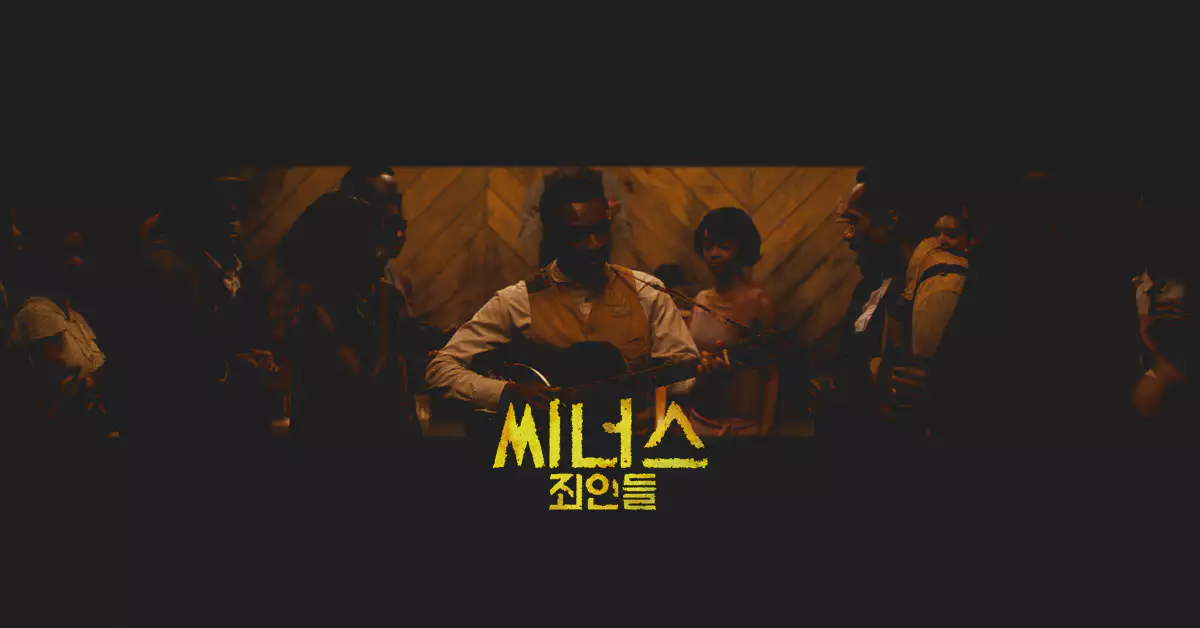
What this creates, in practice, is an unusual viewing experience: the film’s most joyful sequences—and there are genuinely, extravagantly joyful sequences in the first hour, sequences that feel like a kind of cinema rarely made anymore—are already shadowed at the moment of their occurrence. You watch the juke joint filling up, the music beginning, the particular quality of people fully alive in their own specific moment, and you know that most of them won’t make it to morning. The joy is real. The foreknowledge is real. Neither cancels the other. They coexist in the same frame, and the coexistence is the film’s central emotional achievement—one that Coogler earns through structure rather than through manipulation.
About two-thirds through the juke joint sequence, the film does something that has been called visually spectacular and thematically rich. It is both of these things and also something weirder: it constructs a myth of origin in real time.
The blues that Sammie is playing begins to pull other musics toward it. Hip-hop materializes in the crowd. The specific kinetic vocabularies of eras that don’t exist yet in 1932 Mississippi. The juke joint holds, within a single night, a century of what will come after—not as documentary lineage but as something latent, already present in the room, waiting to be called.
This is beautiful filmmaking. It is also, strictly speaking, not true. Musical genealogies are messier than origin myths allow. The sequence claims something that historical musicology would complicate considerably.
But this is what origin myths do, and it is wrong to evaluate them by the standards of documentary record. Origin myths make visible connections that are real but can’t be photographed—the blues did travel through bodies and inheritances, did transform across a century, does connect structurally to what followed. The myth compresses a real process into an image. What the image gains is affective power; what it loses is specificity about how complicated and contingent the actual transmission was. You trade truth for a different order of truth.
Coogler is making a myth here, and he knows it. The Clarksdale crossroads mythology—Robert Johnson selling his soul at the intersection of two highways, receiving in exchange a guitar technique that exceeded ordinary human acquisition—is already a myth the film inherits. The juke joint sequence is the film’s own contribution to that body of mythmaking: a night in which all the music that would follow was already present, waiting.
What the sequence doesn’t show—what I keep returning to—is that the myth was always partial. The music that came forward carried what it carried. It didn’t carry the specific people who made it on that specific night, in that specific room, with those specific bodies and those specific losses. That gap is what the film is about. The night was real and singular. The myth that follows is a different thing. Both are necessary. The necessity of both is what the film spends two hours and seventeen minutes tracing.
Jack O’Connell’s Remmick is the film’s most philosophically interesting creation, and not for the reasons that are easiest to articulate.
He is Irish. He sings folk music. He is ancient enough to have been dispossessed before he became the thing that dispossesses—to have come from a people ground under by another empire, before that process produced something that grinds. The film draws this connection explicitly and does not let it become a moral equivalence. The history is real. It doesn’t make the offer a good one.
What Remmick offers the people inside Club Juke is something like the musical sequence made literal: a community that doesn’t end, a continuity across time, connection without the recurring loss that connection requires when you’re mortal. He is not lying, exactly. The vampires do have community. They share something across centuries. They are, in some sense, a more durable version of what the juke joint was, briefly, on a specific October night.
What they don’t have—what the transformation removes—is the quality of being a particular person in a particular body in a moment that will not come again. The converted face loses something. Not dramatically, not in a way that registers as suffering. It becomes slightly unmoored from the specific pressures and textures of a single life under specific historical conditions.
This is the film’s actual argument, and it is more precise than I expected from a film working in genre conventions. Not: immortality is bad because death gives life meaning. But: immortality removes you from time, and being inside time—on this night, in this body, with these people, in the middle of this music—is the only place certain things can exist at all.
A vampire, I find myself thinking, cannot play the blues. Not because vampires don’t feel things—they clearly do. But because the blues is music shaped by the knowledge that what you’re feeling will be lost, and vampires don’t lose things the same way anymore. The form of the blues is a relationship to time. Remove that relationship and you have something else—perhaps something beautiful, perhaps something with centuries of accumulated sophistication—but not that.
Michael B. Jordan plays both Smoke and Stack, and the technical achievement is so naturalistic that it stops registering as a technical achievement about twenty minutes in and simply becomes the reality of the film. You accept that these are two different men who share a face.
What I haven’t been able to fully account for is what the doubling means.
Smoke and Stack went out into the world—the war, the Chicago gangs—and came back. They have blood on their hands; this is established early and left somewhat ambiguous in its full moral extent. They build Club Juke partly as business and partly as something else: a space that belongs to the community they left and returned to. There is an element of restitution in the project, though the film doesn’t moralize about this.
The doubling might be about the twin selves that violence produces—the self who did what was done and the self that continues living after. It might be about what Black men in 1932 Mississippi had to be in order to survive: two things simultaneously, the man who navigates the white world and the man who exists in the room where the music is playing, and whether those two men can ever be the same person. It might be something simpler and harder to name—about brotherhood as a form of doubling, the other person who knows you completely and reflects something back.
I have been thinking about this since seeing the film and I don’t have a clean reading. The twins die differently and survive differently in memory. What the doubling was ultimately for remains slightly mysterious to me. I’m not certain whether that’s a limitation of my reading or a deliberate withholding on the film’s part. Both seem possible.
There is a simpler account of Sinners that I should probably offer before the essay ends: it is one of the best American genre films in years, made with absolute formal control by a director who has been building toward this kind of authority across five features, and anchored by performances that would define careers even for actors with more established track records than Miles Caton has at the moment of this film. The horror sequences are genuinely frightening. Ludwig Göransson’s music is less a score than a structural element—as foundational to the film as cinematography, which is saying something given what Autumn Durald Arkapaw does with compressed interiors that never feel small. These are real achievements that don’t require the interpretive apparatus I’ve been building.
I’ve been building the apparatus anyway, because that’s what the film provokes. But I want to name the possibility that the apparatus is getting between me and something the film actually is: an experience, felt before understood, of watching something built with care and love and the specific attention of someone who grew up hearing a great-uncle talk about a Mississippi he’d left behind, and who is now making a movie about what might have been in that Mississippi before the leaving—what specific things were real and irreplaceable before history moved through them.
The interpretive framework is something I reach for after. Which is always the critic’s position: retrospective, knowing how the night ended, trying to figure out what to do with that knowledge.
This is also the position the film puts its audience in from the very first frame.
He declined. The film establishes his survival from the opening frame—the bloody young man at the church who will not release his guitar—but the specific shape of what he chose to keep takes the full film to understand. Old Sammie was offered a way out of time—a way to carry the night forward without carrying its grief—and he said no. The film doesn’t give us a speech about why. It gives us an old man still playing.
He kept the music. Or the music kept him. Whether these are the same thing, I genuinely can’t say.
What I find myself uncertain about, finally, is whether keeping the music is the right consolation for what was lost—whether it’s supposed to be the right consolation, or whether Coogler knows the question can’t be answered from inside it. The film gives us the old man playing. It doesn’t give us the face of someone who has arrived at peace.
Maybe that’s the most accurate thing in the film. Not peace but continuation. Not resolution but the specific refusal to stop making sound. The blues as a form doesn’t offer its practitioners relief from what they’re carrying. It offers them a form for carrying it that can be heard.
Whether being heard is enough—whether that constitutes a kind of triumph, or whether it’s survival without the right to that name—is what the film leaves genuinely open. The music ends. The old man is still there. Whatever was in the room on that night in 1932 is now only in him, and in a film about it, and in whatever the viewer carries out.
That last part is the only part I can speak to directly. Something transferred. I’m still not entirely sure what.