A Man Walks After the Rain: Why Plot Is Not Events, But the Pressure Between Them
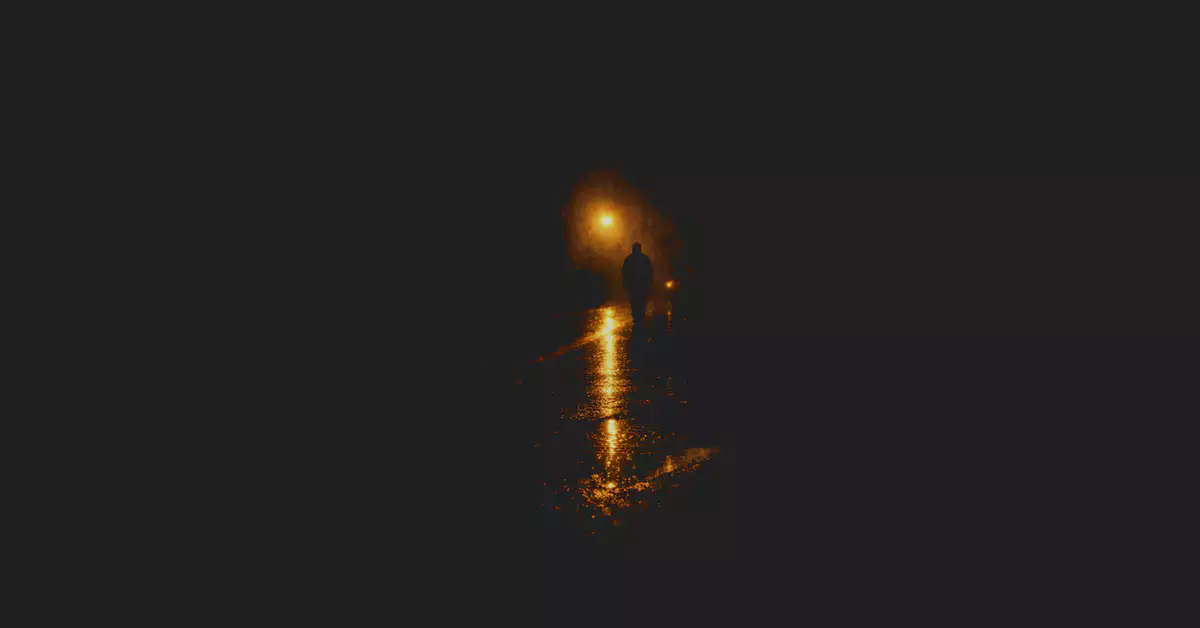
A man walks along a road after the rain. The wet asphalt stretches the glow of a streetlamp into a long ribbon of light, and each time his steps pause the small world inside a puddle trembles for a moment. Nothing seems to happen in the scene, yet something has already begun. Someone is moving toward somewhere, and that movement opens onto the possibility of change. We do not yet know who he is or what he wants. But the simple fact that he has started walking is enough for the force of narrative to come into motion. This is the most primitive form of what we call plot.
Plot is often translated as “storyline,” but the definition flattens the idea almost beyond recognition. A storyline suggests a sequence of events, yet plot lies closer to the relationship between those events than to the events themselves. Someone opens a door. A gunshot rings out in the room. Another person runs in. Three sentences merely enumerate occurrences, but plot emerges only when the invisible thread between them tightens into causality. Why the gunshot sounded, what the person who runs in discovers, how that discovery compels the next action forward. Plot is the unseen pressure that binds events together, the means by which meaning becomes organized within time.
The literary critic E. M. Forster expressed this distinction with unusual clarity. His famous example remains disarmingly simple. “The king died, and then the queen died.” That is a story. But the moment we say, “The king died, and then the queen died of grief,” plot comes into being. Emotion and cause intervene between the two events, and time ceases to be a mere flow. It becomes a structure of meaning. Human beings follow stories through this structure. We remember not simply what happened, but how one event explains another.
At this point plot begins to extend beyond narrative technique into the very architecture of human understanding. The ancient philosopher Aristotle insisted on precisely this point in the Poetics. For him, plot—mythos—was the soul of tragedy. Character and language mattered less than the order in which actions were arranged. Tragedy produces catharsis because a life unfolds within a pattern suspended between necessity and chance. Events appear accidental, yet gradually converge toward an outcome that feels inevitable. The moment of that convergence becomes the moment of tragic recognition.
To treat plot purely as structure, however, risks making the idea sound mechanical. In practice, plot is inseparable from the experience of time. Both the novel and the film are temporal arts. When an event appears, when another is withheld, when a revelation arrives—each of these choices reshapes the meaning of the story itself. The films of Alfred Hitchcock are often cited for precisely this reason. Hitchcock famously observed that suspense depends not on the event itself but on who knows about it, and when. If the audience alone knows that a bomb sits beneath a table, an otherwise ordinary conversation becomes charged with dread. The explosion has not yet occurred, yet plot is already at work, quietly rearranging the emotional temperature of time.
Plot, then, resembles an invisible blueprint of temporality. It arranges events, but it also arranges feeling. As readers or viewers follow a plot, they are not merely asking what is happening. They are asking what might happen next. That anticipation is the essential energy of narrative. Stories move because consciousness leans forward toward the future.
It is therefore striking that modern art so often tries to disturb this structure. Classical plot follows a familiar arc: beginning, middle, end. Yet many twentieth-century writers and filmmakers deliberately fractured that order. The novels of James Joyce shifted attention away from external action toward the interior drift of consciousness, while the films of Alain Resnais rearranged time into fragments of memory and perception. In such works plot no longer advances through clear chains of cause and effect. Instead, images, sensations, and recollections reflect one another across a looser and more ambiguous structure.
And yet even these fractured narratives cannot completely escape plot. Human beings are creatures of interpretation. However scattered the fragments may be, we instinctively search for connection. We look for relationships between images, for motives between actions, for reasons where none are immediately given. Plot is not merely a rule of storytelling; it is an expression of the mind’s impulse to organize experience.
To understand plot, then, is not simply to understand how stories are constructed. It is to understand how human beings read the world through time. We do not experience life as a random accumulation of moments. We attempt to explain how events lead to one another: why a love began, why a failure occurred, how a decision became the present. We read our own lives as though they possessed a narrative design.
Perhaps the deepest function of plot lies precisely there. It transforms the chaos of events into a pattern that can be grasped as a story. Within the turbulent flow of experience we search for cause and consequence, arranging feeling and meaning between them. At that moment life ceases to be a mere succession of hours. It becomes narrative.
And every narrative, in the end, returns to the same quiet question: what will happen next.
Plot is simply the name we give to the tension created by that question.