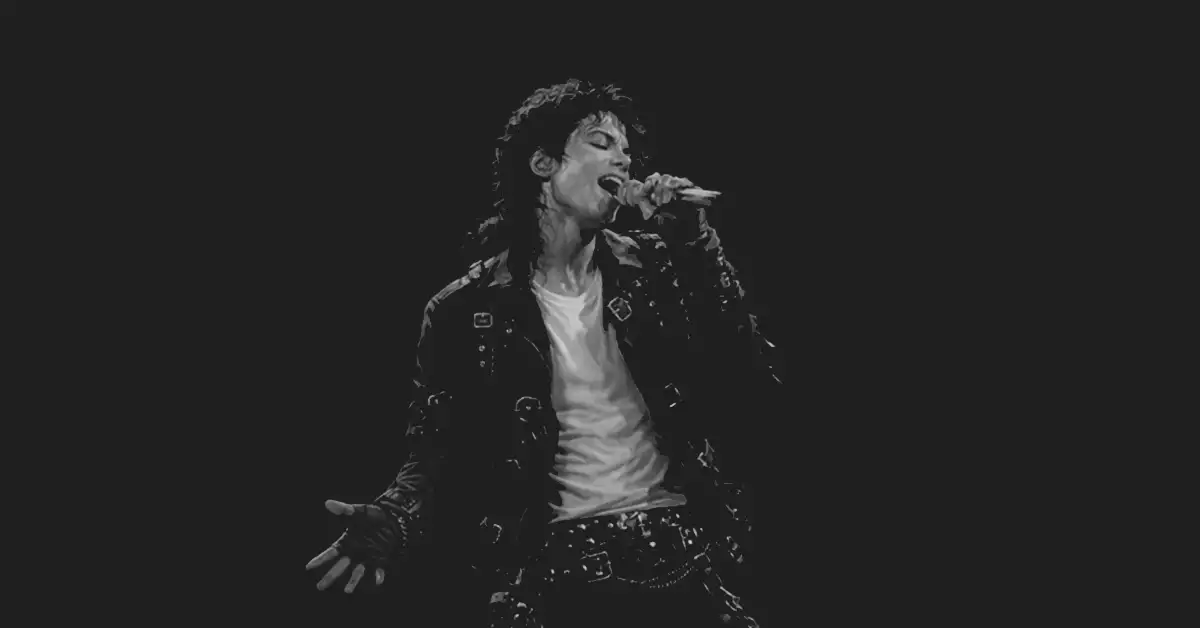
The Boy Who Swallowed the World
“I’m never pleased with anything. I’m a perfectionist. It’s part of who I am.” — Michael Jackson
I. GARY, INDIANA: THE GEOGRAPHY OF A WOUND
There is a house on Jackson Street in Gary, Indiana — a two-bedroom structure so small that, as its most famous resident once wrote, “you could take five steps from the front door and you’d be out the back.” Eleven people lived inside it. Steel mills smoked the horizon. The winters came hard off Lake Michigan. And somewhere in that compressed world of cramped bedrooms and borrowed dreams, something happened that the 20th century would spend the rest of its years trying to understand.
Michael Joseph Jackson was born on August 29, 1958, in Gary, Indiana, the eighth of ten children in a working-class African-American household. His mother, Katherine, was a devout Jehovah’s Witness who played clarinet and piano and harbored her own unrealized musical ambitions. His father, Joe, was a former boxer and crane operator at U.S. Steel who played rhythm and blues guitar for a local band called the Falcons. They were two people whose dreams had curdled into necessity — and who would, together and in opposition to each other, produce one of the most singular human beings the entertainment world has ever seen.
What strikes you about Gary, Indiana, as a setting is its quality of pressure. It is a city built on industrial labor, on the idea that the body exists to serve production — that endurance is virtue, that discipline shapes character. Joe Jackson internalized all of this and brought it home. A strict taskmaster, Joe enforced long and grueling rehearsals for his sons in order for them to have their songs and routines polished. The belt was always nearby. The voice was always critical. And in the center of all this was a boy with an extraordinary ear, an instinctive physicality, and a sensitivity so acute it would become both his greatest gift and his deepest wound.
Michael later said that his father physically and emotionally abused him during rehearsals, recalling that Joe often sat with a belt in hand, ready to punish mistakes. His older brothers, who received the same treatment, largely came to regard this as discipline — the price of ambition, the cost of escape from Gary. But Michael was different. The pain landed differently in him. He was not a child who could absorb punishment and move past it; he was a child who remembered everything, who transformed everything into performance, into art, into myth. The wound never closed. It became the source.
Katherine’s influence was quieter but no less foundational. A singer and pianist, she encouraged her children’s musical talents. “We were a family that sang all the time,” Michael once said of his early life in Gary. “We would take the furniture out of the living room and dance. We would have a songwriting competition while we washed the dishes.” If Joe gave Michael the drive to be perfect, Katherine gave him the permission to love music — to feel that it was not merely a vehicle for escape but a home in itself.
The Jehovah’s Witness framework shaped the household in less visible ways too. There were no Christmas celebrations, no birthdays. Michael would come to lament this for the rest of his life: “There was no Christmas, there were no birthdays, it was not a normal childhood, nor the normal pleasures of childhood. Those were exchanged for hard work, struggle and pain.” He grew up without the rituals of ordinary childhood — without the accumulation of ordinary experience. He was, from the very beginning, being prepared not for life but for performance. The stage would become his world because he had been denied the world that existed before it.
II. THE JACKSON 5: AMERICA’S FIRST FAMILY OF POP
The Jackson 5 were formed in Gary, Indiana, in 1964, originally consisting of brothers Jackie, Tito, Jermaine, Marlon, and Michael. Michael was five years old. He played congas before he could properly read. He watched the older boys rehearse and absorbed their movements the way other children absorb language — instinctively, completely, without apparent effort. By age eight, he was sharing lead vocals with Jermaine. By nine, he was the undisputed center of the group.
What the Jackson 5 offered, in those early years of traveling the Chitlin’ Circuit — opening for Sam & Dave, Gladys Knight, the O’Jays — was something beyond mere precocious talent. There was a hunger to the performance, a controlled wildness, that audiences recognized as real. The boys were not performing childhood; they were performing from inside it, with all the desperate energy of children who had no choice but to succeed. Joe was always watching. The belt was always there, metaphorically if not literally, in every performance. And Michael, the smallest, the most gifted, the most frightened, burned brightest of all.
Having attained local popularity and recorded a single for the Gary-based Steeltown label, the group came to the attention of performers affiliated with Motown Records, including Bobby Taylor and Gladys Knight. Motown president Berry Gordy was so impressed with the youngsters that he signed them to his label in 1969. The Motown deal changed everything — not just financially, but conceptually. For the first time, the Jackson boys were being positioned not as local prodigies but as national, even global, phenomena. Motown gave them the scaffolding of a machine: the songwriters, the choreographers, the image consultants, the machinery of Black crossover pop.
They were the first group to debut with four consecutive number-one hits on the Billboard Hot 100 chart: “I Want You Back” (1969), “ABC,” “The Love You Save,” and “I’ll Be There” (all 1970). The speed of it was staggering. In 1969, Michael Jackson was eleven years old, standing in front of audiences who were screaming at a volume he had never encountered, performing with a professional command that seemed to belong to someone twice his age. He became famous before he had any framework for what fame meant — before he had experienced the ordinary life against which extraordinary life is measured. There was no before, for Michael. There was only the stage.
This is the central tragedy that any serious examination of Jackson’s life must confront: the colonization of childhood by spectacle. Every album, every tour, every screaming crowd represented not just success but erasure — the progressive disappearance of an ordinary self that was never allowed to exist in the first place. The Peter Pan mythology that would later define Jackson’s Neverland years was not an affectation or an eccentricity. It was a sincere and heartbreaking attempt to recover something that had been taken before he could even name it.
III. THE ALCHEMY OF OFF THE WALL: FINDING THE SOLO VOICE
By the mid-1970s, the tensions within the Jackson family had become structural. The move from Motown to Epic Records in 1975 — a decision driven by the brothers’ desire to write and produce their own music — reshaped the group’s identity. But Michael was already moving beyond the group conceptually. He had participated in The Wiz (1978) as the Scarecrow, a performance that gave him his first significant non-Jackson-5 collaboration and introduced him to the man who would become the most important professional relationship of his life.
Quincy Jones, by 1978, was already one of the most formidable figures in American music — a composer, arranger, and producer whose work spanned jazz, film scores, and popular music across three decades. His encounter with Michael Jackson on The Wiz set was, by all accounts, one of those quietly seismic moments in cultural history. Jackson’s previous solo albums had failed to cross over to diverse audiences, so he and Jones hoped to win over the mainstream through a fresh reimagining of disco as it exited its era of dominance, imbuing the genre with a new frontier of synthesizers and electronic drum grooves.
Off the Wall (1979) was the result — and it announced not just the arrival of a solo Michael Jackson but the emergence of a new form of popular music. The album’s central achievement was its synthesis: it was simultaneously a Black music record and a pop record, an adult record made by a young man, a deeply personal document dressed in exquisitely crafted commercial clothes. Songs like “Don’t Stop ‘Til You Get Enough” — which Jackson composed himself, reportedly humming the melody into a tape recorder at three in the morning — revealed a sensibility operating at a level beyond mere craft. There was something visionary at work.
The Grammy apparatus, characteristically, failed to recognize it. The Grammys pigeonholed it into R&B genres, failing to nominate any of its megahits — including “Don’t Stop ‘Til You Get Enough” or “Rock With You.” This slight enraged Jackson, who was acutely aware of what it meant for a Black artist to be confined to a racial category by an industry that simultaneously profited from his music. The Grammy snub became fuel. He told Quincy Jones that for their next album together, he wanted to make something that could not be ignored, something that could not be reduced to any single category, something that would force the industry to look at him without the mediating lens of racial expectation.
He was twenty-one years old. He was already thinking in terms of legacy.
IV. THRILLER: THE EARTHQUAKE
There is a moment, on March 25, 1983, when the world changed. A television special called Motown 25: Yesterday, Today, Forever was broadcast across America, and Michael Jackson — performing “Billie Jean” — stopped the song at a specific moment, positioned his feet, and executed a movement that would be forever afterward known as the moonwalk. He glided backward with his body moving forward, defying physics in real time, defying the ordinary relationship between human bodies and gravity. The studio audience erupted. Every person watching at home felt something in their chest they could not immediately name.
But Thriller — the album — had already been out for four months by that point. It had entered the cultural bloodstream through a different kind of alchemy: the combination of Jackson’s mature voice, Quincy Jones’s visionary production, and a set of songs that refused to be categorized. Thriller was Jackson’s first number-one album on the Billboard Top LPs & Tape chart, and stood atop for a record 37 non-consecutive weeks. The album’s second and third singles, “Billie Jean” and “Beat It,” topped the Billboard Hot 100 chart.
The album’s cultural impact, however, was never merely commercial. It operated on a deeper register — a register that had everything to do with race in America and the structures of exclusion that shaped the music industry. MTV initially refused to air the video for “Billie Jean,” as the network’s executives felt Black music did not fit into its rock-centered format. Walter Yetnikoff, the president of Jackson’s record company CBS Records, was enraged by their refusal. Yetnikoff threatened to go public with MTV’s stance on racial discrimination: “I said to MTV, ‘I’m pulling everything we have off the air… I’m going to go public and fucking tell them about the fact you don’t want to play music by a Black guy.'”
MTV relented. “Billie Jean” entered heavy rotation. And then came “Thriller” — the fourteen-minute short film directed by John Landis, featuring a cast of dancing zombies and a spoken-word segment by horror legend Vincent Price, at a cost that left the music industry astonished. The cultural significance was immediate: the success of Thriller broke down racial barriers not just in music but in other areas of contemporary society. Critic Greg Tate observed that Black people regarded Thriller’s breakthrough as if it were their own battering ram against apartheid. Civil rights activist Al Sharpton commented: “Way before Tiger Woods or Barack Obama, Michael made Black people go pop-culture global.”
This is the dimension of Jackson that is most easily forgotten in the later years of his life — that he was, in the early 1980s, a genuine civil rights figure in the guise of a pop star. His insistence on crossing over, on refusing to be confined to a racial market, on demanding that the full machinery of mainstream commercial music be made available to him, was not merely personal ambition. It was a structural challenge to a deeply entrenched system. Every time “Billie Jean” played on MTV, it was also an argument — an argument that the music industry had been trying not to hear.
Thriller won a record-breaking eight Grammy Awards, including Album of the Year and Record of the Year for “Beat It,” and earned Jackson a record-breaking eight American Music Awards. It became, and remains, the best-selling album in recorded history. Four decades later, Thriller is estimated at sales exceeding 70 million copies worldwide — a testament to its unprecedented fusion of pop sensibilities, R&B authenticity, and rock edge that transcended every conceivable demographic barrier.
The moonwalk, the red jacket, the single glove, the zombie choreography — all of these became immediately iconic in the way that only the most precisely realized images become iconic: not through overexposure but through an authenticity of vision so complete that the image attaches itself permanently to cultural memory. Jackson had not simply made a great album. He had invented a new template for what a popular artist could be — a visual-sonic phenomenon in which music, image, dance, and cultural politics were inseparable.
V. THE ARCHITECTURE OF SOLITUDE: NEVERLAND AND THE PRIVATE SELF
Success at the scale Jackson achieved does something specific to the self. It creates a kind of absolute isolation — a condition in which the ordinary human transactions of daily life become impossible. You cannot walk to a grocery store. You cannot sit in a park. You cannot have a conversation that does not carry the weight of the other person’s knowledge of who you are. The famous live inside their fame the way people live inside their bodies — inescapably, sometimes agonizingly.
Jackson’s response to this condition was Neverland Ranch — a 2,700-acre property in the Santa Ynez Valley of California that he purchased in 1988 and transformed into something that defies easy categorization. It was simultaneously a private amusement park, a working ranch, a zoo, a cinema, a train station, and a monument to the childhood he had never had. The name was deliberate and confessional: J.M. Barrie’s Peter Pan, the boy who refused to grow up, who lived in a place without time, who surrounded himself with children because children had not yet learned to see the world through the diminishing lens of adult expectation.
The Neverland mythology, and its later exploitation in media narratives about Jackson, cannot be separated from the question of what it means to be denied a childhood. Jackson was not eccentric in the way that powerful men sometimes perform eccentricity — as a display of the freedom that wealth and status confer. He was eccentric in the way that people with wounds are eccentric: his strangeness was the shape of his damage. The elaborateness of Neverland was a measure of the depth of what had been taken from him in Gary, Indiana, in those rehearsal rooms with the belt nearby and the father who sat in judgment.
He spoke about this with extraordinary directness in his 1993 interview with Oprah Winfrey — an interview watched by more than 90 million viewers, the most-watched television interview in American history at that point. He spoke of his childhood abuse at the hands of his father; he believed he had missed out on much of his childhood, and said that he often cried from loneliness. For a brief moment, the mass media’s relationship to Jackson shifted: he was no longer the eccentric pop star but a person speaking in pain about real experience. The audience responded. Dangerous re-entered the charts.
But the media’s attention is not sustained by empathy. It is sustained by drama. And Jackson, for all his genius as a performer, was constitutionally unable to navigate the demands of a media landscape that required him to be either saint or monster, never simply a complex human being. His changing physical appearance — the successive surgeries, the lightening of his skin, which he attributed to vitiligo — became a canvas onto which every anxious cultural projection about race, identity, beauty, and the relationship between the inner and outer self was mapped. He became, in the tabloid imagination, a figure of grotesque transformation. In reality, he was a man who had grown up being told by his own father that his nose was wrong, his face was wrong, his body was insufficient, and who had spent his adult life trying to correct the damage through the only means available to him.
VI. BAD AND THE PHYSICS OF INFLUENCE
Between Thriller and Bad (1987) lay five years of pressure that would have crushed most artists. The expectation generated by the best-selling album of all time was not merely commercial — it was civilizational. How do you follow a cultural earthquake? How do you remain a person when you have become a phenomenon?
Bad was Jackson’s answer, and it remains one of the most undervalued achievements in popular music. It was not Thriller — it could not be, could never be, nothing could be — but it was something arguably more interesting: the work of an artist who had survived the impossible pressures of his own success and emerged with a more complex, more adult artistic voice. Bad proved he could follow a masterpiece — five number one hits, including “Smooth Criminal,” whose gravity-defying lean forward move still wows dance classes today.
The Bad album and tour represented a different kind of ambition than Thriller — not the ambition of breaking through but the ambition of deepening. The Bad World Tour, spanning September 1987 to January 1989, set records for attendance and revenue that would not be surpassed for decades. He played to over four and a half million people across fifteen countries. He was the first artist to sell out a single venue — Wembley Stadium in London — seven consecutive times. The performances were studied for years afterward by production designers, choreographers, and concert promoters as the template for what a global pop tour could be.
Jackson worked with producer Quincy Jones for the last time on Bad. Their collaboration — three albums, Off the Wall, Thriller, and Bad — constitutes one of the most productive partnerships in the history of popular music: over a hundred million records sold worldwide, nine personal Grammy Awards for Jackson across the first two albums alone, and a permanent reshaping of what pop music could sound like and mean. The Grammy story of Bad itself, however, carries its own particular irony. In 1984, Thriller had yielded one of the most dominant single nights in Grammy history — eight awards in one evening, including Album of the Year. Four years later, Bad arrived as the best-selling album of 1987, the first record ever to produce five consecutive number-one singles — and Jackson walked away with nothing. U2’s The Joshua Tree claimed Album of the Year. Producer of the Year went to Narada Michael Walden. Little Richard, presenting onstage, expressed what the room felt: “I’m shocked. I’m stunned.” The shutout was a measure of the impossible standard Thriller had set — a standard so high that even a masterpiece could disappear beneath it. When Jackson and Jones parted ways after Bad, it marked the end of something irreplaceable — a creative period so concentrated in its excellence that it functions almost as its own historical epoch, one the Grammy Academy could only fail to honor in real time.
VII. THE PRICE OF THE CROWN: RACE, BODY, AND VISIBILITY
To understand Michael Jackson fully, you must understand what it meant to be the most famous Black man in the world in the 1980s — in a country where Black visibility in mainstream entertainment had been systematically suppressed, where an R&B artist could not get airtime on the most influential music channel in the world, where crossover success required a kind of permanent negotiation between authenticity and palatability.
Jackson navigated this negotiation in ways that were sometimes brilliant and sometimes devastating. His music, consistently, remained rooted in Black musical tradition — the gospel-inflected vocal runs, the funk rhythms, the R&B structures that undergirded even his most pop-facing records. But his visual presentation became increasingly detached from any legible racial identity. The skin lightening, the cosmetic surgeries, the successive transformations of his face — these were read by some in the Black community as a kind of self-erasure, as an aspiration toward whiteness. Critics including Spike Lee accused him of self-erasure or aspiring to whiteness through cosmetic surgeries and skin treatments, viewing these changes as a rejection of Black heritage amid his crossover success.
These critiques, however pointed, missed something essential. Jackson’s transformation of his body was not aspiration toward whiteness but a flight from a self that had been systematically denigrated — first by his father’s verbal cruelty, then by a media apparatus that made his face the subject of perpetual judgment and comment. He was a man who had been told, from earliest childhood, that he was not beautiful enough, not acceptable enough, not adequate as he was. His response was not to aspire to whiteness but to aspire to something beyond race altogether — to a kind of idealized androgynous image that belonged to no category the existing world had a name for.
This is also what made him genuinely strange, genuinely singular. He refused the available identities. He was not a Black artist who made pop music, in the way that classification usually works. He was something else — a figure who forced the collapse of those categories, who made their inadequacy visible by exceeding them in every direction simultaneously.
VIII. THE LEGACY: WHAT SURVIVES THE MYTH
Michael Jackson died on June 25, 2009, of acute propofol and benzodiazepine intoxication, administered by his personal physician Conrad Murray in preparation for what was to have been Jackson’s This Is It comeback tour — fifty dates at London’s O2 Arena, a return to the stage after years of legal battles, financial turmoil, and public humiliation. He was fifty years old.
The shock was global and immediate. Tributes came from every continent. Traffic on the internet collapsed under the weight of collective searching. The grief was real — not the grief of losing a celebrity but the grief of losing something that had been woven into the texture of the world’s collective experience. Billions of people had grown up with Michael Jackson. His music had scored their childhoods, their love lives, their most private memories. He was, in the most literal sense, the soundtrack of an era.
What survives him is more complicated than either his defenders or his critics have been willing to acknowledge. The music survives — unambiguously, powerfully, in ways that seem to grow stronger with each passing year. Thriller remains the best-selling album in history. “Billie Jean” is still one of the most instantly recognizable pieces of recorded sound ever made. The moonwalk — that thirty-second moment at Motown 25 — is still taught in dance studios on every continent.
The legacy also carries, irresolvably, the weight of the allegations that defined his later life: the child molestation accusations that first surfaced in 1993, were the subject of a criminal trial in 2005 at which Jackson was acquitted on all counts, and were renewed in the 2019 documentary Leaving Neverland. These allegations remain genuinely contested — contested by legal record, by conflicting testimony, by the complex and often unreliable nature of retrospective claims about events decades past. They cannot be resolved here, and it would be dishonest to pretend otherwise. What can be said is that they are part of the full picture — that the mythology of Michael Jackson cannot be sanitized into simple heroism any more than it can be reduced to simple monstrosity.
What the mythology requires, and what it has rarely received, is the recognition of its full complexity: a child robbed of childhood who spent his adult life reaching for it; a Black artist who broke every racial barrier the music industry had constructed and paid for it with his body; a performer of such staggering gifts that he permanently enlarged the possibilities of popular music; a human being shaped by damage into something extraordinary and then consumed by the machinery of a fame he had helped to build.
Antoine Fuqua, who is directing the forthcoming biopic, has described the project as “a very spiritual journey.” He explains that his motivation was precisely this complexity: “Michael was a big part of my life growing up, a big influence on my career, an incredible artist — but he was a human being, and we’re exploring that.”
That is, in the end, the most difficult and necessary thing to do. To see Michael Jackson as a human being — not a myth, not a symbol, not a monster, not a saint, but a man whose life was one of the most extraordinary and most tragic in the history of modern culture. A child from Gary, Indiana, who swallowed the world and was, in turn, swallowed by it. A boy who became a King. A King who could never stop being a boy.
The music remains. The moonwalk remains. The wound, too, remains — transformed, as all wounds are when they belong to artists of sufficient power, into something that outlasts the life that carried it.
Michael, directed by Antoine Fuqua and starring Jaafar Jackson, opens April 24, 2026.
— Feature Analysis
The fundamental structure of this work