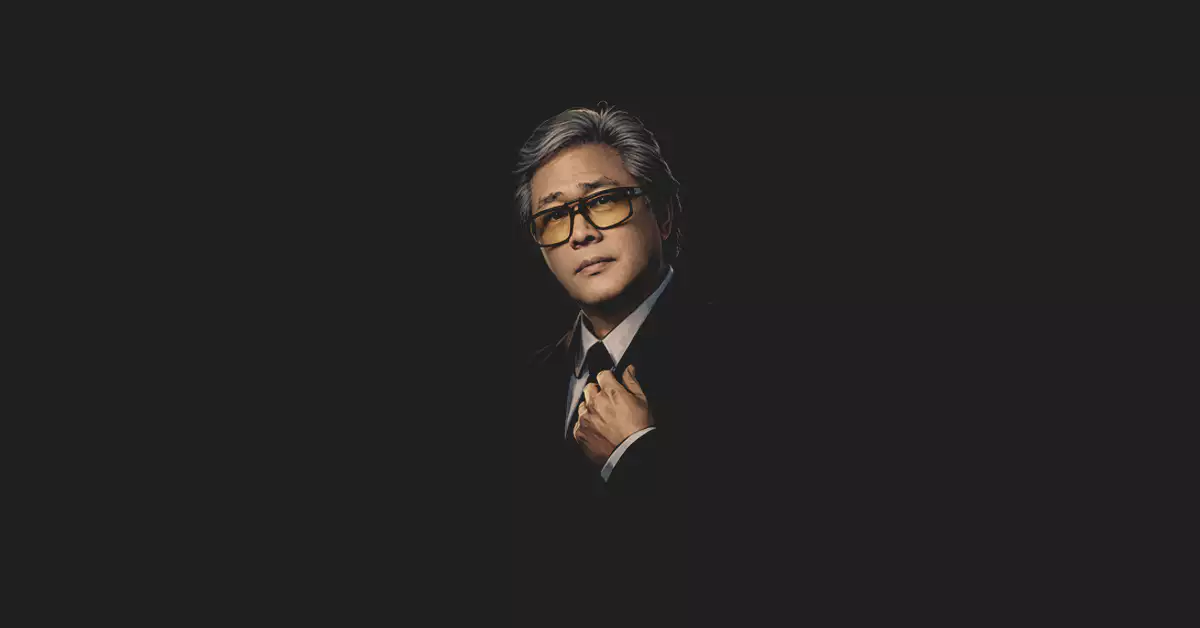
Park Chan-wook Movies: Analyzing the Best Filmography through the Politics of Sensation
After the rain, a window always doubles the world. The landscape outside is laid once more, thinly, across the surface of the glass, and over it settles the faint reflection of the interior; reality slips into layers. Recall a moment from The Handmaiden: the pane is no mere backdrop but an apparatus in which desire and deception reflect and proliferate. Rather than simply gazing at it, the camera glides into it, casting doubt on vision itself. By then we are already experiencing not what Park Chan-wook’s cinema is about, but how it constructs a world. His films are always concerned with a movement that passes through surfaces—an ethics of the image, a politics of sensation.
In the corridor sequence of Oldboy, the camera slides laterally, organizing violence into something like mechanical repetition. It is often reduced to a “one-take,” yet it is closer to a construction of time that conceals its cuts, a continuity that effaces its own ruptures. What matters is not the name of the technique, but the texture of time thus sustained. Time without visible cuts does not compress the event; it dilates it, pressing the viewer into the interior of violence. But that interior is never singular. The worn pattern of the wallpaper, the ragged breath of the body, the dull rhythm of blows fall out of sync, forming a fissure. Within that fissure, violence ceases to be a mere act and becomes a structure of sensation. Park does not simply show violence; he composes the way it endures.
This endurance often works to suspend ethical judgment. In Sympathy for Lady Vengeance, revenge is less the restoration of justice than a meticulously staged rite. The camera arranges figures frontally, sealing their emotions within heightened color and music. Revenge is no longer an eruption of the interior but an element of mise-en-scène, distributed across the surface. The viewer, rather than identifying with feeling, witnesses how feeling is constructed and consumed. Park’s cinema does not so much doubt the authenticity of emotion as expose the form of emotion itself.
Such formal insistence is frequently reduced to the label “stylish,” but style here is not ornament—it is a mode of thought. In Thirst, blood is not merely a physiological substance; it functions as a chromatic force that renders visible the collapse of ethical boundaries. Red invokes at once the body’s desire and the prohibition of the sacred, fixing characters between incompatible orders. The camera does not explain their suffering; it presents it as a beautiful composition. Beauty here does not neutralize ethics; it overturns the way ethics operates. The instant we experience the image as “beautiful,” we have already slipped outside a given moral frame.
What recurs across Park’s work is this structure of doubleness. Love and violence, purity and corruption, sacrifice and pleasure do not exclude one another; they overlap incessantly. In Decision to Leave, this structure is modulated into a subtler register. The camera follows a character’s gaze, only to betray it, sliding into another angle. Dialogue refrains from delivering emotion clearly; it leaves behind a residue that resists translation. The delicate gap between Korean and Chinese reveals the incompleteness of meaning, turning love into a misheard language. Here, love is not confessed; it is continually mistransmitted.
Park’s cinema thus probes the interval between seeing and believing. His camera is not a transparent instrument of representation but a device that disassembles vision itself. In this, his work stands apart from the classical ideal of a lucid, unbroken gaze. Instead, it reveals how images are constructed, how they seduce, how they betray. Truth, in his films, is never unveiled. It is layered, deferred, transformed—remaining ultimately out of reach.
What lingers, then, is not the closure of narrative but the residue of sensation. Even after a scene ends, some fragment of the image remains within us, refusing interpretation. Like the trace of rain on a windowpane, it does not disappear; it continues to obstruct vision. And it is precisely within that obstruction that we begin, again, to see his cinema.
Park Chan-wook’s Cinema FAQ
A guide to understanding how image, emotion, and perception are constructed across surfaces in Park’s films.
Why do Park Chan-wook’s films often feel visually complex or layered?
Park Chan-wook frequently composes images that contain multiple visual layers—reflections, frames within frames, and overlapping spaces. These are not simply aesthetic choices but ways of questioning how we see. By placing reflections and surfaces between the viewer and the subject, his films suggest that vision is never direct or neutral, but always mediated, shaped by perspective, desire, and interpretation.
What makes the corridor scene in Oldboy so distinctive?
The corridor fight in Oldboy is often described as a single continuous shot, but its significance lies in how it structures time and perception. The extended duration prevents quick emotional release and instead forces the viewer to remain inside the action. Small details—breathing, movement, rhythm—fall slightly out of sync, making the violence feel sustained and physical. Rather than presenting violence as a brief event, the scene emphasizes how it unfolds and endures over time.
How do Park’s films treat themes like love, violence, and morality?
In films such as The Handmaiden, Sympathy for Lady Vengeance, and Decision to Leave, emotions and moral positions are rarely presented as clear or stable. Love and violence, desire and guilt often overlap rather than oppose each other. Park stages these tensions through visual composition, color, and editing, allowing viewers to observe how emotions are constructed instead of simply identifying with them. This creates a distance that encourages reflection rather than immediate judgment.
— Related Critiques: Formalist Perspectives
The trajectories of cinematic Mise-en-scène